
Header
Sir Ganga Ram Hospital, New Delhi

Cancer Pain Management: Options and What Helps

Summary

Cancer pain is common, but you don't have to put up with it. The National Cancer Institute says pain can be controlled in most people with cancer, and that good pain control improves quality of life during and after treatment. Treatment is built around the type of pain you have.

Mild pain may respond to simple medicines, moderate to severe pain usually needs opioids such as morphine, and nerve pain often needs different drugs altogether. Treating the cause with radiation or other procedures, and adding supportive and palliative care, can ease the load further. The most important step is telling your team how much pain you're in, because they can only treat what they know about.

Cancer Pain Management: Options, Medicines and What Actually Helps

What causes cancer pain, how it’s treated, and why asking for relief early makes a difference

This page is for informational purposes only and does not replace medical advice. Please consult Dr Aditya Sarin or a qualified oncologist about your pain and which treatments suit you. Never change or stop a pain medicine without speaking to your doctor. As of 2026, this reflects current clinical guidance.

A lot of people go quiet about pain during cancer. They don’t want to bother the doctor, assume it’s part of the deal, or fear what strong medicines mean. That silence is one of the biggest reasons pain goes untreated. Here’s what causes cancer pain, what the options are, what opioids can and can’t do, and how to get help in India.

Why does cancer cause pain?

Pain can come from the tumour itself, from treatment, or from tests and procedures. The National Cancer Institute says pain is one of the most common symptoms in people with cancer. It lists several sources:

  • The tumour, pressing on bone, nerves, or organs.
  • Treatment, such as surgery, radiation, or chemotherapy.
  • Pain flares, sudden bursts that break through steady pain control.
  • Nerve damage, including peripheral neuropathy, a nerve problem from chemotherapy that can cause pain, numbness, and tingling in the hands and feet.

Pain can also be made worse by anxiety, low mood, and poor sleep, which is why treating those matters too.

How is cancer pain assessed?

Your team will ask where it hurts, how bad it is, and what it feels like. The NCI says they’ll also do physical and neurological exams, and sometimes imaging, to work out what’s causing it and plan treatment. Everyone needs a personal plan, since diagnosis, cancer stage, and personal preferences all differ.

How to describe your pain

Pain is hard to describe, but a few details help your doctor choose the right treatment:

  • Where it is, and whether it spreads
  • How strong it is, on a scale of 0 (none) to 10 (worst imaginable)
  • What it feels like: dull, aching, sharp, burning, tingling, or shooting
  • What makes it better or worse, including movement, rest, and time of day
  • How it affects your life, such as sleep, eating, walking, and mood

A simple daily pain diary makes appointments more useful.

Cancer pain medicines

Everyday pain relievers

For mild pain, non-opioid medicines such as paracetamol or anti-inflammatory tablets may be enough on their own. They’re also often continued alongside stronger medicines. Check with your oncologist before taking any, because some aren’t safe with certain treatments or kidney, liver, or bleeding problems.

Opioids for moderate to severe pain

The NCI says opioids work very well for moderate to severe cancer pain, and most people with cancer pain receive them on a regular schedule, which keeps the pain controlled and stops it from building. Morphine is the most commonly used opioid for cancer pain. Doses are adjusted gradually to balance pain relief against side effects, and opioids can be given as tablets, liquids, patches, or by injection or infusion when needed.

Common side effects include constipation, drowsiness, and nausea. Constipation tends not to fade, so ask for a laxative from the start. Drowsiness usually settles within a few days, according to the Canadian Cancer Society, and sometimes it’s simply your body catching up on rest now that the pain is under control.

Medicines for nerve pain

Nerve pain often feels burning, tingling, or electric, and ordinary painkillers don’t always help. An NCI interview with palliative care specialist Dr Judith Paice notes that nerve pain may be treated with antiseizure medicines such as gabapentin or antidepressant-type medicines such as duloxetine, sometimes alongside an opioid. If you have burning or tingling pain from chemotherapy, mention it specifically, since it can respond to a different approach.

Treatments that go after the cause of pain

Medicines manage symptoms. Sometimes it’s better to tackle the source.

  • Radiation therapy: can shrink a tumour that’s pressing on bone or nerves. It’s often used for pain from cancer that has spread to the bone, and it can meaningfully improve quality of life even in advanced disease. Our guide to radiation oncologists and when you need one explains this role.
  • Nerve blocks: injections that interrupt pain signals from a specific area, useful when medicines aren’t enough. The NCI notes that after pain is relieved by treatments such as nerve blocks or radiation, the opioid dose may be reduced.
  • Treating the cancer itself: when chemotherapy, targeted therapy, or surgery shrinks the tumour, pain often eases with it.
  • Surgery or other procedures: for example, to stabilise a weakened bone or relieve a blockage.

Supportive approaches that help alongside medicines

These aren’t replacements for pain medicine, but they can add real relief:

  • Physiotherapy and occupational therapy, for stiffness, movement, and daily tasks.
  • Relaxation, breathing exercises, and counselling, since anxiety and low mood can make pain harder to control.
  • Heat or gentle massage, if your team confirms it’s safe for your area.
  • Complementary approaches such as acupuncture or yoga, which the NCI lists among options some people use. Ask your team first, particularly if your blood counts are low or you’ve had radiation.

What is palliative care?

Palliative care is specialist care focused on easing symptoms like pain and improving quality of life, and it can run alongside cancer treatment at any stage. It isn’t only for the end of life. A palliative care team can fine-tune your pain medicines, treat side effects, and support you and your family emotionally.

Getting cancer pain relief in India

India has made real progress in access to strong pain medicines, but access remains uneven. Under the Narcotic Drugs and Psychotropic Substances (NDPS) Act, morphine was very hard to get for years. A 2014 amendment aimed to remove those barriers by creating a category called Essential Narcotic Drugs and simplifying licensing, as described by Indian palliative care advocates. The same source says gaps remain in how states have implemented this, and that many state lists still omit oral morphine.

What this means in practice:

  • Ask directly about oral morphine if you have severe pain, and ask whether your hospital has a palliative care or pain clinic
  • Know that availability differs between hospitals and states, so if one place can’t supply it, ask for a referral rather than accepting pain as normal
  • Ask about home-based palliative care if travel is difficult, since many cities have services run by non-profits
  • Don’t let anyone shame you for needing strong pain relief

When to get urgent help

Call your care team the same day, or go to emergency care, if you have:

  • Sudden, severe, or rapidly worsening pain.
  • New back or neck pain with weakness, numbness, or loss of bladder or bowel control.
  • Pain with fever, or new chest pain or breathlessness.
  • Vomiting that stops you keeping your medicines down.
  • Marked drowsiness, confusion, or very slow breathing after an opioid dose.
  • Pain that your current plan simply isn’t controlling.

The takeaway

Cancer pain is common, and it’s treatable. The best results come from telling your team honestly how you feel, using the right medicine for the right type of pain, and not letting myths about opioids stand in the way. If pain is affecting your treatment, sleep, or daily life, book a consultation with Dr Aditya Sarin to talk through a plan that fits your situation.

References

Frequently Asked Questions

Can cancer pain be controlled completely?

Not always, but it can be significantly eased for most people. The aim is enough relief that you can sleep, eat, move, and enjoy your day.

Will I become addicted to morphine for cancer pain?

Addiction is not common when opioids are used to treat cancer pain under medical supervision. Your doctor will monitor your dose. Physical dependence and tolerance are different from addiction and are manageable.

What is the best medicine for nerve pain in cancer?

Nerve pain often needs different medicines from ordinary pain, such as gabapentin or duloxetine, sometimes with an opioid. Your doctor will choose based on your symptoms and other health conditions.

Does needing strong painkillers mean my cancer is advanced?

No. Pain levels don’t automatically reflect how advanced the cancer is. People take strong pain medicines at many stages, including after surgery and during curative treatment.

Can radiation help with cancer pain?

Yes. Radiation can shrink tumours pressing on bone or nerves and is commonly used to relieve pain from bone spread.

Is morphine available in India for cancer pain?

Yes, but access varies by state and hospital. Ask your doctor about oral morphine and whether your hospital has a palliative care or pain service.

Dr. Aditya Sarin — Medical Oncologist, Sir Ganga Ram Hospital, Delhi
Medically reviewed & written by

Dr. Aditya Sarin

Consultant, Medical Oncology · Sir Ganga Ram Hospital, New Delhi

MD (General Medicine) · DrNB (Medical Oncology) · ESMO (European) Board Certified

Dr. Aditya Sarin is a medical oncologist who combines precision molecular profiling with evidence-based, compassionate cancer care. Named Young Medical Oncologist of the Year, he treats the full spectrum of solid and blood cancers through a multidisciplinary tumor-board approach at Sir Ganga Ram Hospital.
Breast Cancer Lung Cancer GI Cancers Head & Neck Gynecologic Cancers Immunotherapy Targeted Therapy Precision / Molecular Oncology Leukemia · Lymphoma · Myeloma

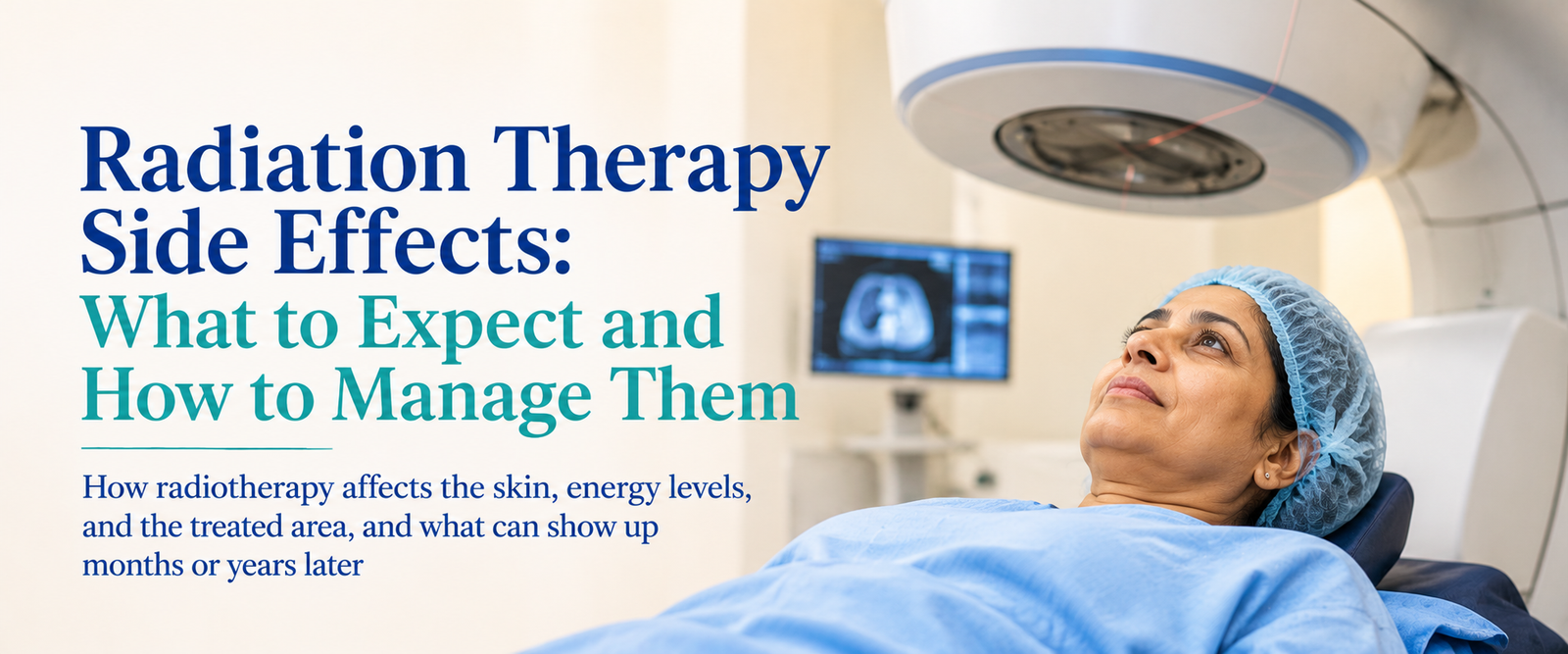
Radiation Therapy Side Effects and How to Manage Them

Summary

Radiation therapy side effects mostly happen in the part of the body being treated, apart from fatigue, which can affect everyone. Common early effects include tiredness and skin changes that look like sunburn, plus effects specific to the treated area, such as mouth soreness after head and neck radiation or bowel changes after abdominal radiation. Most early side effects settle within weeks to a few months after treatment ends. Late effects can appear months or even years later, depending on the area treated and the dose. Careful planning aims to keep that risk low, and your radiation team can help with almost every side effect, so tell them early rather than waiting it out.

Radiation Therapy Side Effects: What to Expect and How to Manage Them

How radiotherapy affects the skin, energy levels, and the treated area, and what can show up months or years later

This page is for informational purposes only and does not replace medical advice. Please consult Dr Aditya Sarin or a qualified oncologist about the side effects you can expect from your treatment plan. As of 2026, this reflects current clinical guidance.

If you’ve been told you need radiation, you’re probably most curious or most worried about the side effects. It helps to know the treatment itself isn’t painful, side effects vary widely from person to person, and most are predictable and manageable. Some people have very few. Here’s what’s typical, how to care for your skin, how to manage fatigue, and what long-term effects to know about.

Why does radiation cause side effects?

Radiation kills cancer cells, but it also affects healthy cells in the treated area. The American Cancer Society says every person reacts differently, and that your side effects depend on the type and location of your cancer, the dose, and your general health. Unlike chemotherapy, which travels through the whole body, radiation is aimed at one area, which is why most of its side effects are local.

Early and late side effects

  • Early side effects happen during or shortly after treatment. They’re usually short-term, mild, and treatable, and they tend to fade within a few weeks to a few months after treatment ends.
  • Late side effects can take months or even years to appear, and they can occur in any tissue that received radiation. Your risk depends on the area treated and the dose.

Fatigue after radiation

Fatigue is one of the most common effects, and it’s the one that can happen no matter which part of the body is treated. The ACS describes it as feeling tired physically, mentally, and emotionally, and explains that it happens because treatment destroys some healthy cells along with cancer cells. Most people start feeling tired a few weeks into treatment.

Why is it different from normal tiredness?

Radiation fatigue differs from everyday tiredness and may not improve with rest. According to the ACS, no scan or blood test can measure it, so the best measure is how you describe it. A useful trick is to rate it from 0 to 10 and tell your team if the number keeps rising.

What helps

  • Plan a rest period during the day, and a short nap if you need one.
  • Eat well, since your body needs nutrients to repair itself (Canadian Cancer Society).
  • Keep moving gently throughout the day, such as a short walk, if your team says it’s fine.
  • Ask family and friends to take on errands and chores.
  • If you can, talk to your employer about flexible hours or time off.

Tell your team if fatigue keeps getting worse, disrupts your routine, or doesn’t ease at all. Some fatigue has a treatable cause, such as low blood counts, poor sleep, or low mood. It can also linger for a few months after radiation ends, and that’s common.

Radiation burns: Skin care during treatment

What people call radiation “burns” is usually radiation dermatitis. The ACS lists symptoms such as redness, irritation, swelling, blisters, and itching, often resembling a sunburn. Skin changes tend to build up over the weeks of treatment, then settle after it ends. Treated skin may stay darker or more sensitive than before, even after healing.

Skin care do’s

The Canadian Cancer Society offers these practical tips:

  • Wash gently with warm water and mild soap, rinse well, and pat dry.
  • Wear loose, soft clothing over the area, preferably cotton or silk, rather than harsh fabrics.
  • Cover treated skin with a hat or clothing outdoors, and ask your team about sunscreen and when to start it.
  • Tell your team if the skin gets cut or scraped.

Skin care don’ts

  • Don’t scrub or scratch the area
  • Don’t put anything hot or cold on it, including heating pads and ice packs
  • Don’t wash off the ink markings used to target treatment until your last session
  • Don’t use powders, perfumes, deodorants, body oils, or lotions without asking first

Ask before using any product

This one matters in India, where home and herbal remedies are common. The same Canadian Cancer Society guidance says creams, ointments, supplements, and herbal remedies can irritate skin or even affect how radiation works. That includes products many families trust, such as turmeric paste, oils, or aloe. Your radiation team can suggest something safe, and they’d much rather you ask than guess.

Tell the team early about any skin changes. They can help with pain and irritation and prevent infection, particularly if blisters or open areas appear.

Side effects by treatment area

Beyond fatigue and skin changes, the effects depend on where you’re being treated. These are common examples, not everything you might experience:

Area treated

Possible side effects

Head and neck

Hair loss in the area, mouth soreness, taste changes, trouble swallowing, a less active thyroid

Chest

Trouble swallowing, cough, shortness of breath

Abdomen

Nausea, vomiting, diarrhoea, bladder changes

Pelvis

Bowel and bladder changes, effects on sexual health and fertility

Brain

Headaches, hair loss, nausea, fatigue, dizziness, hearing changes

If you’re having head and neck radiation, a dental check beforehand is recommended, since mouth care becomes important during treatment. Appetite changes are also common, and small, frequent meals can help if you’re struggling to eat.

Side effects can be stronger when radiation is given together with chemotherapy. If that’s your plan, our chemotherapy side effects guide covers what to expect.

Long-term effects of radiation

Most people recover well from radiation, but some effects can appear later. The ACS notes that late effects may show up months or years after treatment, and that careful treatment planning is aimed at avoiding serious long-term problems. Which ones apply to you depends on the area treated and your dose. Examples include:

  • Chest radiation: Lung or heart problems that can develop months or years later. 
  • Head and neck radiation: A less active thyroid, which is easily checked with a blood test and treated with tablets.
  • Brain radiation: Memory, concentration, or speech changes that can start from about six months to years later.
  • Skin: Lasting darkening, dryness, or sensitivity in the treated area.

Is there a risk of a second cancer?

The risk is small. The American Cancer Society says radiation can raise the chance of other cancers, mostly solid tumours, and that these usually develop 10 years or more after treatment. For most people, the benefit of treating the cancer in front of them far outweighs that small future risk, and long-term follow-up helps catch any change early.

When to call your radiation team

Don’t wait for your next scheduled visit if you notice:

  • A fever, especially if you’re also on chemotherapy.
  • Blistering, open or weeping skin, or signs of infection such as spreading redness, pus, or warmth.
  • Being unable to eat, drink, or swallow properly.
  • Severe or persistent diarrhoea, nausea, or vomiting.
  • New breathlessness, chest pain, or a worsening cough.
  • New headaches, confusion, weakness, or vision changes, especially after brain radiation.
  • Fatigue that keeps getting worse or stops you from doing daily tasks.

Your radiation oncologist and team check in regularly during treatment, but you know your body best. When in doubt, call.

The takeaway

Radiation side effects are real but largely predictable, and most settle after treatment ends. Gentle skin care, rest, good nutrition, and open communication with your team make a big difference. If you’d like help understanding how radiation fits into your overall plan, book a consultation with Dr Aditya Sarin for a clear, coordinated starting point.

References

Frequently Asked Questions

What are the most common side effects of radiation therapy?

Fatigue and skin changes are the most common early effects. Other side effects depend on the treated area, such as hair loss or mouth soreness with head and neck radiation, or bowel changes with abdominal radiation.

How long do radiation side effects last?

Most early side effects fade within a few weeks to a few months after treatment ends. Skin reactions usually heal within a few weeks, though the skin may stay darker or more sensitive. Late effects can appear months or years later.

How can I care for radiation burns on my skin?

Wash gently with warm water and mild soap, pat dry, wear loose cotton clothing, and protect the area from the sun. Don’t use creams, powders, or home remedies without asking your radiation team first, and don’t wash off your treatment markings.

Will I feel tired all the time during radiation?

Fatigue is common and often builds after a few weeks, but it varies. It may not improve with rest. Pacing yourself and telling your team if it worsens can help.

Can I work during radiation therapy?

Many people continue working or doing usual activities, depending on how they feel and the area treated. Talk to your team and your employer about flexibility.

Does radiation therapy cause cancer?

There’s a small risk of a second cancer years later, usually 10 or more years after treatment. For most patients, the benefit of treatment outweighs it.

Dr. Aditya Sarin — Medical Oncologist, Sir Ganga Ram Hospital, Delhi
Medically reviewed & written by

Dr. Aditya Sarin

Consultant, Medical Oncology · Sir Ganga Ram Hospital, New Delhi

MD (General Medicine) · DrNB (Medical Oncology) · ESMO (European) Board Certified

Dr. Aditya Sarin is a medical oncologist who combines precision molecular profiling with evidence-based, compassionate cancer care. Named Young Medical Oncologist of the Year, he treats the full spectrum of solid and blood cancers through a multidisciplinary tumor-board approach at Sir Ganga Ram Hospital.

Breast Cancer Lung Cancer GI Cancers Head & Neck Gynecologic Cancers Immunotherapy Targeted Therapy Precision / Molecular Oncology Leukemia · Lymphoma · Myeloma

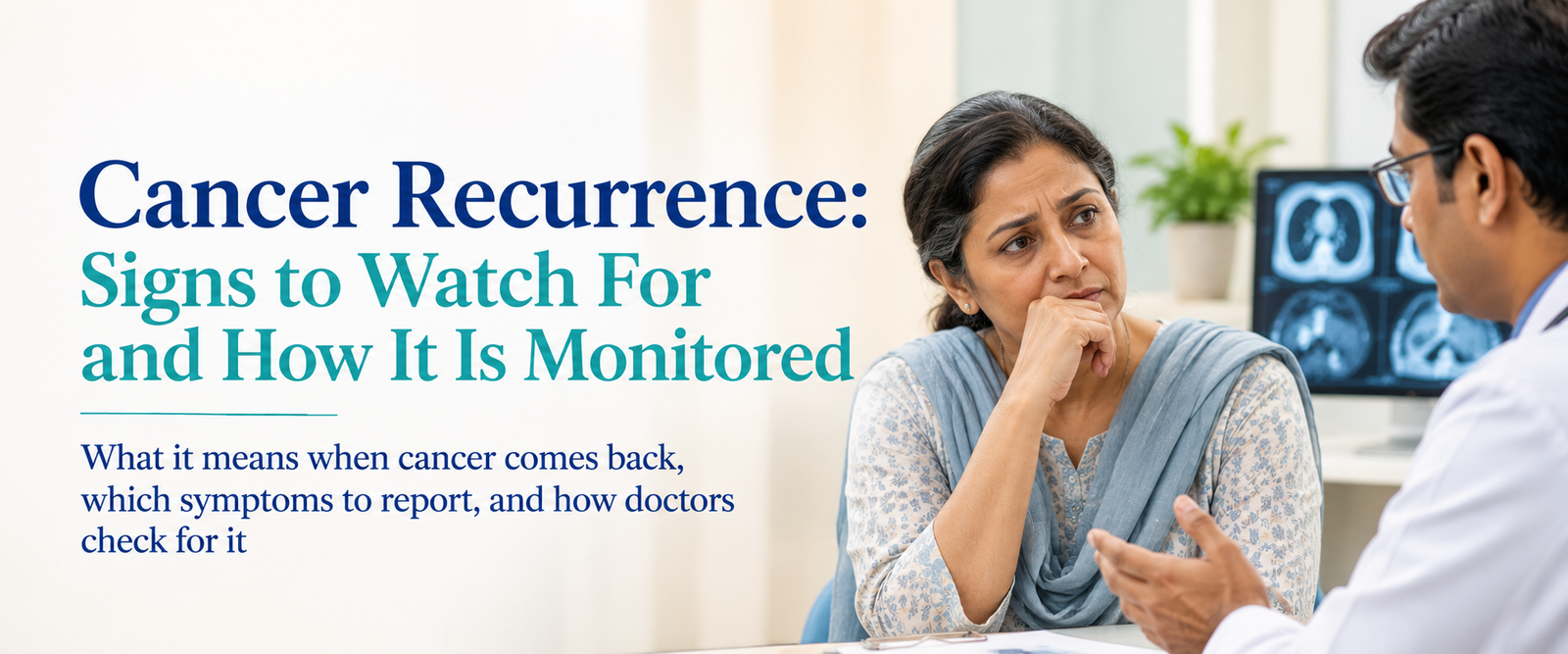
Cancer Recurrence: Signs to Watch For and How It Is Monitored

Summary

Cancer recurrence means the cancer you were treated for has returned after a period when it couldn't be detected. It can come back in the same place (local), nearby lymph nodes (regional), or another part of the body (distant). Warning signs depend on where it returns and often resemble the symptoms you had the first time.

Doctors monitor for it through scheduled follow-up visits, blood tests, and imaging, and confirm any suspicious finding with a biopsy. A new, unrelated cancer is called a second cancer, and it's managed differently from a recurrence. Most new symptoms after treatment turn out to be something else, but the only way to know is to get them checked.

Cancer Recurrence: Signs to Watch For and How It Is Monitored

What it means when cancer comes back, which symptoms to report, and how doctors check for it

This page is for informational purposes only and does not replace medical advice. Please consult Dr Aditya Sarin or a qualified oncologist about any new symptom or your follow-up plan. As of 2026, this reflects current clinical guidance.

After treatment ends, most people live with a quiet background question: how would I know if it came back? The honest answer is that you don’t have to watch your body like a hawk. You need to know which changes matter, and you need a monitoring plan that does the heavy lifting. Here’s what recurrence is, what to look out for, and how follow-up works.

What is cancer recurrence?

Recurrence is when cancer comes back after treatment. According to the National Cancer Institute, it may happen weeks, months, or even years after treatment, and it begins with cancer cells that the first treatment didn’t fully remove or destroy. Some of those cells may have been too small to see on follow-up tests. That doesn’t mean your treatment was wrong or that you did anything to cause it.

Local, regional, and distant recurrence

  • Local: The cancer returns in the same place or very close to the original site.
  • Regional: It grows in nearby lymph nodes or tissues.
  • Distant: It spreads to organs or tissues far from the original cancer.

NCI notes that local recurrence may be easier to treat than regional or distant recurrence, though this varies from person to person. Recurrent cancer also keeps its original name. As Cedars-Sinai explains, lung cancer that returns in the bones is still lung cancer, and is treated that way.

Recurrence, metastasis, relapse, and “secondary cancer”: What’s the difference?

These terms get mixed up, and “secondary cancer” in particular means different things to different people. The American Cancer Society separates them like this:

  • Metastatic cancer is cancer that has spread.
  • Recurrence is cancer that returns after a period following successful treatment.
  • Relapse is cancer or its symptoms returning after a period of improvement.
  • Second cancer is a new, unrelated cancer made of different cells from the first.

So when someone says “secondary cancer,” they might mean spread (metastasis) or a brand-new cancer. If a tumour shows up somewhere new, ACS says your team will likely biopsy it to find out whether it’s metastasis or a second cancer, because the answer changes treatment.

What are the signs of cancer recurrence?

The signs depend on where the cancer returns. The NCI’s guide to breast cancer recurrence makes the point clearly: symptoms differ between local, regional, and distant recurrence, and distant recurrences in breast cancer most often turn up in the bones, lungs, brain, or liver.

Symptoms worth reporting

These are general examples, not a checklist for diagnosing yourself:

  • Any symptom you had before the cancer was found, coming back.
  • A new lump or swelling, including in the neck, armpit, or groin.
  • New, persistent, or worsening pain, such as bone pain or back pain.
  • Unexplained weight loss, ongoing fatigue, or loss of appetite.
  • A cough or breathlessness that doesn’t go away.
  • Persistent headaches, vision changes, or neurological symptoms.
  • Yellowing of the skin or eyes, or ongoing digestive changes.
  • A sore, ulcer, or scar that won’t heal.

Cedars-Sinai says to tell your care team if you notice any of the symptoms you had before, and adds that new symptoms could be late side effects of treatment, or have nothing to do with cancer at all, such as infections, aches, and pains. Many of those are easily treated. A good rule of thumb is that anything new that lasts more than a couple of weeks deserves a call, not a wait.

How is cancer recurrence monitored?

Monitoring is built into follow-up care. According to Cedars-Sinai, your team will ask how you’re feeling and what symptoms you have, and will do physical exams and blood tests. They may also order imaging such as ultrasound, CT, or MRI. Visits are usually every few months at first, and then more spread out over time.

What follow-up looks like

The exact schedule depends on your cancer type, stage, and treatment. 

Confirming a recurrence

If a test or symptom raises concern, the next step is usually imaging to see where and how far the disease extends, and often a biopsy to confirm it. 

Scans aren’t always the answer

More testing isn’t automatically better. For many cancers, routine scans without symptoms haven’t been shown to improve outcomes, and a normal-looking test can still cause worry when results are borderline. If you’re offered a package of tumour marker tests or a PET-CT with no clear reason, it’s fair to ask what question the test is meant to answer.

What affects your risk of recurrence?

Cedars-Sinai says your risk depends on the type of cancer, your overall health and age, the treatments used, and other factors, and that doctors can’t know for sure whether your cancer will return. That’s why your oncologist is the best source for your personal picture.

What is a second cancer?

A second cancer is a new cancer that’s unrelated to your first, made of different cells. The ACS says second cancers aren’t common, and the rate varies with your age at first diagnosis, the treatment you received, and the type of cancer.

Treatment-related risks

Some treatments can slightly raise the chance of a second cancer later. According to the American Cancer Society:

  • Radiation: can raise the risk of other cancers, mostly solid tumours, usually developing 10 years or more after treatment
  • Certain chemotherapy drugs: second cancers usually occur within 10 years, though some can appear decades later, and the risk rises with higher doses and longer treatment
  • Tamoxifen: the risk is low, but it can slightly increase the chance of uterine cancer after breast cancer treatment

These risks are generally small compared with the benefit of treating the original cancer, and your team weighs them when planning your care. 

What if cancer comes back?

A recurrence is hard to hear, and anger, fear, and grief are normal responses. It’s also not the end of options. Treatment depends on the cancer type, where it’s growing, what you’ve had before, how long it’s been since treatment, and your health and preferences. It may look like your first treatment or be completely different, so it’s reasonable to get a fresh review of your options and a second opinion.

The takeaway

You can’t control whether cancer returns, but you can control how quickly it’s found. Keep your follow-up appointments, know which symptoms to report, and call early instead of waiting. If you’re finishing treatment or something new worries you, book a consultation with Dr Aditya Sarin for a clear, coordinated plan.

References

Frequently Asked Questions

What are the first signs that cancer has come back?

They depend on where it returns, and often resemble your original symptoms. Common examples include a new lump, persistent pain, unexplained weight loss, a lasting cough, or fatigue that doesn’t improve. Report anything new that lasts more than a couple of weeks.

How is cancer recurrence detected?

Through follow-up visits that include a physical exam, blood tests, and imaging when needed. A biopsy confirms the diagnosis if something suspicious is found.

What is the difference between recurrence and a second cancer?

Recurrence is the same cancer coming back. A second cancer is a new, unrelated cancer that develops from different cells. They’re staged and treated differently.

Does “secondary cancer” mean the cancer has spread?

It can. People use the term for both metastasis (spread of the original cancer) and a second primary cancer. Ask your doctor which one they mean.

When is the risk of recurrence highest?

It varies by cancer, but is often highest in the first few years after treatment, which is why follow-up is closest then. Some cancers can still recur late.

Can I lower my risk of a second cancer?

You can’t remove the risk, but avoiding tobacco, keeping a healthy weight, staying active, and keeping up with recommended screening all help.

Dr. Aditya Sarin — Medical Oncologist, Sir Ganga Ram Hospital, Delhi
Medically reviewed & written by

Dr. Aditya Sarin

Consultant, Medical Oncology · Sir Ganga Ram Hospital, New Delhi

MD (General Medicine) · DrNB (Medical Oncology) · ESMO (European) Board Certified

Dr. Aditya Sarin is a medical oncologist who combines precision molecular profiling with evidence-based, compassionate cancer care. Named Young Medical Oncologist of the Year, he treats the full spectrum of solid and blood cancers through a multidisciplinary tumor-board approach at Sir Ganga Ram Hospital.

Breast Cancer Lung Cancer GI Cancers Head & Neck Gynecologic Cancers Immunotherapy Targeted Therapy Precision / Molecular Oncology Leukemia · Lymphoma · Myeloma