
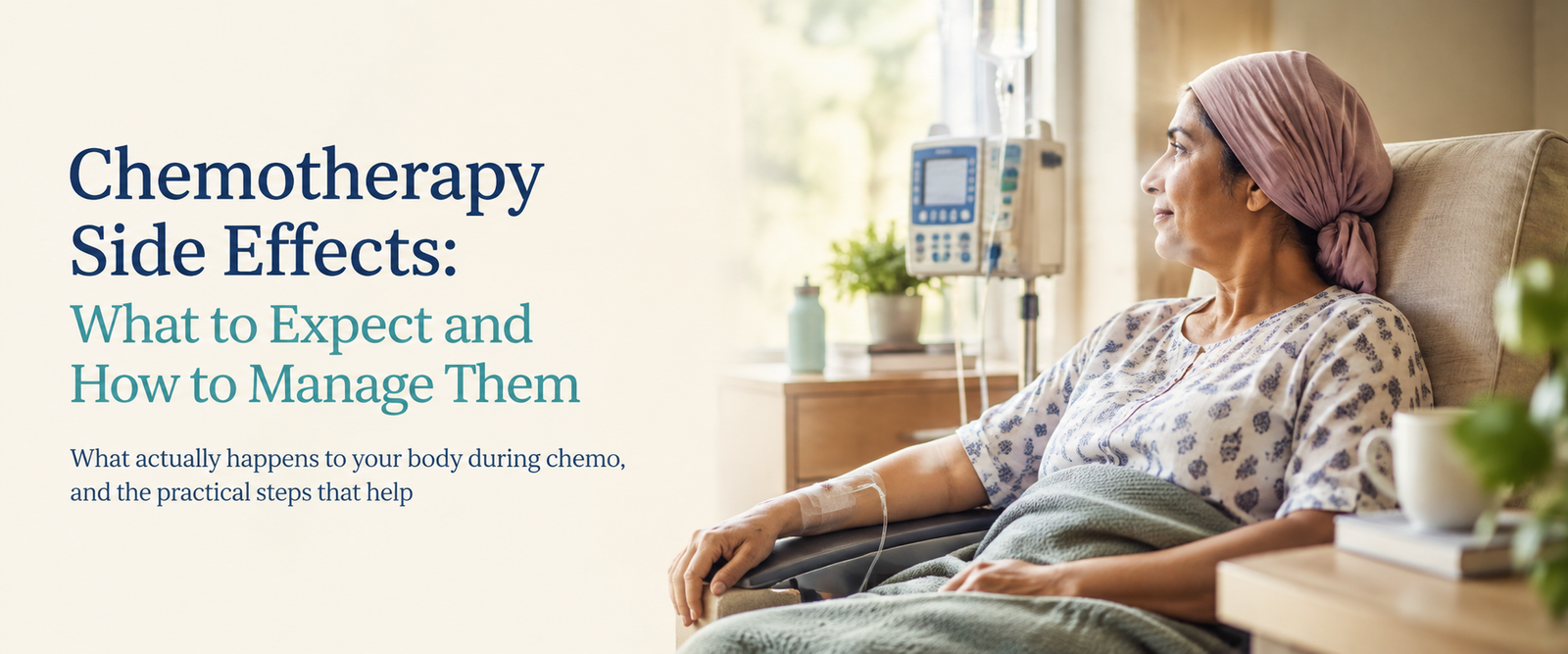
Chemotherapy Side Effects: What to Expect and How to Manage Them
What actually happens to your body during chemo, and the practical steps that help
This page is for informational purposes only and does not replace medical advice. Please consult Dr Aditya Sarin or a qualified oncologist about your specific treatment plan and what side effects to expect. As of 2026, this reflects current clinical guidance.
If you’ve just started chemotherapy, or you’re about to, the side effects list can feel like the scariest part of the whole process. Some of that fear is fair. Chemo does affect the body beyond the tumour it’s targeting. But a lot of what people picture- constant vomiting, total hair loss for everyone, being wiped out every single day- isn’t how it plays out for most patients anymore. Anti-nausea medication in particular has come a long way over the past couple of decades. Here’s what’s actually common, why it happens, and what helps.
Why chemotherapy causes side effects in the first place
Chemotherapy drugs work by attacking cells that divide quickly, which is exactly what cancer cells do. The problem is that several types of healthy cells also divide fast, including cells in the bone marrow, the lining of the mouth and gut, and hair follicles. When chemo affects those cells too, you get the side effects most people associate with treatment. According to the American Cancer Society, your likelihood of experiencing a given side effect also depends on the dose and combination of drugs used, which is why two patients on similar-sounding regimens can have very different experiences.
Fatigue
Fatigue is widely reported as the single most common side effect of chemotherapy, and it isn’t the same as normal tiredness. It can be deep and persistent, largely unrelated to how much sleep you got, and it tends to peak a few days after each treatment session before easing off until the next one. The American Cancer Society’s guide to cancer-related fatigue notes that fatigue can come from the cancer itself, the treatment, or both, and that it’s worth reporting to your care team rather than assuming it’s something you just have to push through.
A few things that genuinely help:
- Plan demanding tasks for the days you know you tend to have more energy, rather than fighting through low days
- Short naps during the day, alongside normal sleep at night, rather than one or the other
- Light, regular movement. It sounds counterintuitive when you’re exhausted, but gentle exercise, even a short walk, tends to reduce fatigue rather than worsen it
- Let people actually help with errands and chores instead of pushing through alone
If fatigue is affecting your ability to function day to day, or it’s not easing at all between sessions, tell your oncologist. Sometimes fatigue has a treatable cause underneath it, like anaemia, rather than being chemo itself.
Nausea and vomiting during chemotherapy
Nausea is probably the side effect people dread most, and historically it was one of the hardest to control. That’s changed a lot. The National Cancer Institute explains that chemotherapy-induced nausea and vomiting can be acute (within 24 hours of treatment), delayed (one to seven days after), or anticipatory (before treatment even starts, often after a rough earlier session), and that anti-nausea medicines given before treatment work well to prevent or reduce it in most patients.
Alongside medication:
- Small, light meals through the day instead of a few large ones
- Skip greasy, spicy, or strongly scented food, since smell can trigger nausea even more than taste
- Keep fluids up, since nausea and vomiting can dehydrate you quickly
- Sitting upright for a while after eating, rather than lying down, is one of the tips the Mayo Clinic recommends alongside medication
Keep your oncology team updated on how well your anti-nausea plan is actually working. It’s adjustable, and you shouldn’t feel like you just have to get through it.
Hair loss from chemotherapy
Hair loss is one of the most visible and, for a lot of people, emotionally difficult side effects. It happens because chemo drugs damage the fast-dividing cells in hair follicles, and it can affect hair anywhere on the body, not just the scalp. A 2023 review in PMC puts the rate of chemotherapy-induced hair loss at around 65% of patients, though this varies a lot by drug and dose, and not everyone going through chemo loses their hair.
The good news is that it’s temporary for most patients. According to the American Cancer Society, whether and how much hair loss happens depends on the specific treatment, and hair typically starts growing back within a few months of finishing chemotherapy, sometimes with a different texture or colour at first.
Scalp cooling is currently the only FDA-cleared option for reducing chemotherapy-induced hair loss, using a cold cap during treatment sessions to reduce blood flow to the scalp. It doesn’t work for everyone and isn’t suitable for every cancer type, so ask your oncologist whether it’s an option for your specific treatment. Others plan ahead with wigs, scarves, or a shorter haircut before treatment starts, which some people find makes the transition feel less sudden.
Other side effects worth knowing about
Fatigue, nausea, and hair loss get most of the attention, but chemo can also affect:
- Appetite and taste: food may taste metallic or just unappealing for a while
- Mouth sores and dry mouth
- Digestive changes, including diarrhoea or constipation depending on the drug
- Numbness or tingling in hands and feet (peripheral neuropathy)
- Lower blood counts, which raise infection risk and can cause easy bruising or bleeding
Not everyone gets all of these, and your oncologist will usually tell you upfront which ones are more likely with your specific regimen.
When a side effect needs urgent attention
Most chemo side effects are unpleasant but manageable at home with your care team’s guidance. A fever is different. Because chemotherapy can lower your white blood cell count, a condition called neutropenia, your body’s ability to fight infection drops too, sometimes to the point where fever is the only warning sign something is wrong. The National Cancer Institute and the CDC both advise calling your care team right away for a temperature of 100.4°F (38°C) or higher, even if you otherwise feel okay, and note that this risk is usually highest 7 to 12 days after a chemo dose, when blood counts hit their lowest point.
Other symptoms that warrant a same-day call include severe or persistent vomiting, chest pain, shortness of breath, unusual bleeding or bruising, or any sign of infection around a catheter or port site.
How your medical oncologist manages side effects through treatment
Side effect management isn’t a separate add-on to chemotherapy; it’s built into the plan from the start. A medical oncologist like Dr Aditya Sarin adjusts anti-nausea protocols, monitors blood counts between cycles, and can modify dosing or timing if side effects become too severe, all while keeping the treatment as effective as possible against the cancer itself. This is part of why regular check-ins during chemo matter beyond just tracking the tumour. Side effects you mention casually can change what happens at your next session.
The takeaway
Chemotherapy side effects are real, but they’re also largely predictable and manageable with the right support. If you’re starting treatment soon or already partway through and something doesn’t feel manageable, book a consultation with Dr Aditya Sarin to talk through what to expect and how to adjust your plan.
References
- American Cancer Society: Cancer-Related Fatigue
- American Cancer Society: Nausea and Vomiting Caused by Cancer Treatment
- National Cancer Institute: Nausea and Vomiting Related to Cancer Treatment
- American Cancer Society: Coping with Hair Loss
- Rossi et al., Chemotherapy-Induced Alopecia: A Review, PMC (National Library of Medicine)
- National Cancer Institute: Infection and Neutropenia During Cancer Treatment
- CDC: Preventing Infections in Cancer Patients
- Mayo Clinic: Best Ways to Prevent Nausea from Cancer Treatment
- American Society of Clinical Oncology (ASCO): Antiemetics Guideline Update, Journal of Clinical Oncology