
SIR GANGA RAM HOSPITAL

Old Rajinder Nagar, Rajinder Nagar, New Delhi, Delhi, 110060

Call Us on.

+91 9315125514‬ | +91 78386 82838‬

Mail Us

Dradityasarin@gmail.com

Precision oncology: How molecular profiling personalises cancer treatment

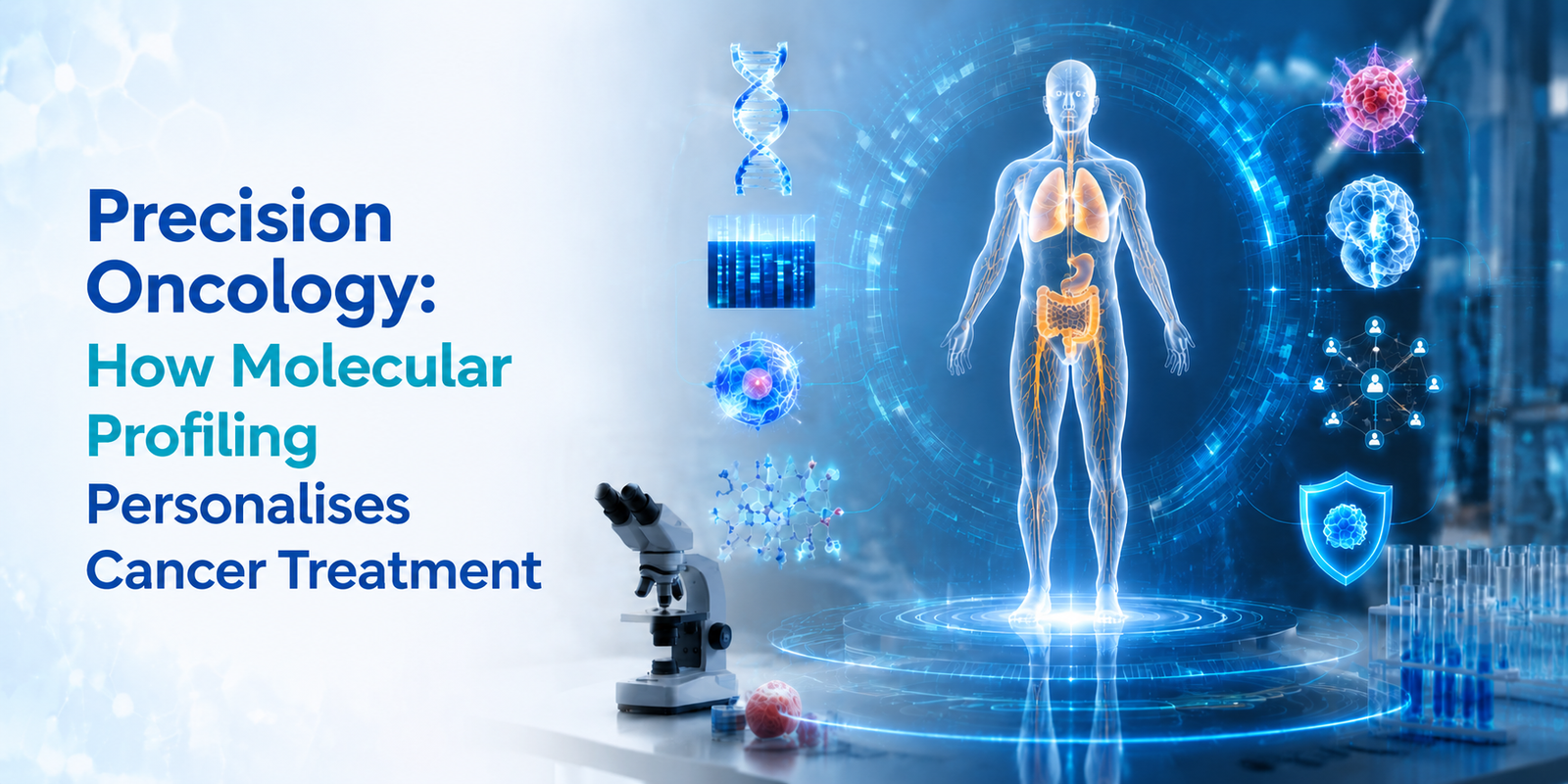
Precision Oncology: How Molecular Profiling Personalises Cancer Treatment – futuristic holographic human body with DNA sequencing, genomic analysis, AI diagnostics, and molecular profiling visualising personalised cancer treatment.

Summary

Precision oncology uses a tumour's genetic and molecular profile, rather than its location in the body alone, to select treatment. This guide explains molecular profiling, next-generation sequencing, the biomarkers that guide targeted therapy, the role of the multidisciplinary tumour board, and how Dr Aditya Sarin applies this approach at Sir Ganga Ram Hospital.

What is precision oncology?

Precision oncology is an approach to cancer treatment that uses the genetic and molecular characteristics of an individual patient’s tumour to select therapy, rather than applying a standard protocol based solely on cancer type and stage.

Instead of asking only “what kind of cancer is this,” precision oncology asks “what specific mutations and biomarkers are driving this particular tumour, and which treatments target them directly.” The result is a treatment plan built around the patient’s own tumour biology.

This approach has become central to modern oncology because tumours that look identical under a microscope can behave very differently depending on their underlying genetic drivers, and treatments that work well for one genetic profile may do little for another.

What is molecular profiling in cancer treatment?

Molecular profiling is the process of analysing a tumour’s DNA, RNA, and proteins to identify specific genetic mutations, gene fusions, and biomarkers, which then guide treatment selection.

Profiling typically starts with a tissue sample from a biopsy or surgical specimen, though a blood-based liquid biopsy is increasingly used when tissue is limited or degraded. Next-generation sequencing is the most accessible method for describing genomic alterations in cancer patients from both tumour tissue samples and circulating cell-free DNA in blood, as outlined in a clinical review of NGS applications in oncology.

The output of molecular profiling is a report identifying which mutations are present in the tumour and, where evidence exists, which approved or investigational therapies target those specific mutations. The National Cancer Institute’s overview of biomarker testing explains this process in more detail, including how results are used to guide treatment and, in some cases, clinical trial eligibility.

What is next-generation sequencing, and how does it work?

Next-generation sequencing, commonly abbreviated as NGS, is a laboratory technique that reads large numbers of genes simultaneously to detect the mutations driving a specific tumour, rather than testing one gene at a time.

NGS enables detailed genomic profiling of tumours, identifying the genetic alterations that drive cancer progression and facilitating personalised treatment plans targeted to specific mutations. This is a meaningful shift from older single-gene tests, which could only check for one mutation at a time and often missed relevant alterations outside the gene being tested.

NGS-based genomic profiling can identify actionable mutations, such as EGFR, KRAS, and ALK, as well as immunotherapy biomarkers such as PD-L1, tumour mutational burden, and microsatellite instability, thereby guiding personalised treatment selection, according to a review of NGS’s transformative impact on cancer care.

Tissue samples are not always sufficient for this kind of testing. Biopsy material can be too limited or too degraded for a complete analysis, which is why liquid biopsy, a blood test that detects tumour DNA circulating in the bloodstream, has become an important complementary option, particularly for monitoring how a tumour changes over the course of treatment.

What are cancer biomarkers, and which ones matter most?

A biomarker is a measurable molecular feature of a tumour that indicates how the cancer is likely to behave or which treatments are likely to work against it. Biomarker testing has become a standard part of the diagnostic workup for several major cancer types.

Biomarker

What it indicates

Associated treatment approach

EGFR mutation

Growth signal specific to certain lung cancers

Targeted EGFR inhibitor therapy

ALK fusion

A gene rearrangement driving tumour growth

Targeted ALK inhibitor therapy

PD-L1 expression

Likelihood of response to immune checkpoint therapy

Immunotherapy

Microsatellite instability or mismatch repair status

DNA repair deficiency associated with certain tumours

Immunotherapy eligibility

HER2 expression

Growth signal seen in some breast, gastric, and lung cancers

HER2-targeted therapy

KRAS mutation

A common driver mutation across several cancer types

Targeted therapy where an approved inhibitor exists

National Comprehensive Cancer Network guidelines describe biomarker testing, including PD-L1 testing by immunohistochemistry, as part of the standard molecular diagnostic workup for lung cancer, and testing recommendations continue to expand as new targeted therapies are approved. Not every biomarker applies to every cancer type, which is why the specific panel tested depends on the tumour being investigated. Our guide on types of cancer specialists in Delhi explains which oncologist typically orders this kind of testing.

How does a multidisciplinary tumour board fit into precision oncology?

A multidisciplinary tumour board is a regular meeting where medical oncologists, surgical oncologists, radiation oncologists, radiologists, and pathologists review a patient’s case together and agree on a treatment plan, rather than one doctor deciding in isolation.

This matters directly for precision oncology, because interpreting a molecular profiling report and translating it into a treatment plan often requires input from multiple specialities at once. A mutation with a targeted therapy option may still require a surgical or radiation opinion on timing and sequencing.

A matched-pair analysis of patients across 66 tumour types found that patients with three or more multidisciplinary tumour board meetings in their history had significantly better overall survival than those with no tumour board meetings. Similarly, a retrospective cohort study of stage III non-small cell lung cancer found that patients whose cases were discussed at a multidisciplinary tumour board had significantly improved overall survival at 1, 3, and 5 years.

The tumour board is not a formality. It is a structural safeguard that ensures a complex, genomically informed treatment plan is checked from every relevant angle before it begins.

How does precision oncology differ from standard treatment?

Factor

Standard, protocol-based treatment

Precision oncology

Starting point

Cancer type and stage

Cancer type, stage, and tumour genetic profile

Treatment selection

Fixed protocol for the cancer type

Matched to specific mutations and biomarkers present

Testing required

Standard imaging and pathology

Imaging, pathology, and molecular or genomic profiling

Suitability

Broadly applicable

Depends on tumour type and availability of a matched therapy

Precision oncology does not replace chemotherapy, surgery, or radiation. In many cases, it works alongside these standard treatments, using molecular data to determine which systemic therapy is most likely to be effective, in what sequence, and whether a targeted drug or immunotherapy should be added to or substituted for a standard regimen.

What does Dr Aditya Sarin’s precision oncology approach involve?

Dr Aditya Sarin is a Consultant Medical Oncologist at Sir Gangaram Hospital, New Delhi, holding a DrNB in Medical Oncology and an MD in General Medicine, and is ESMO board-certified with specialised training from Harvard Medical School in immuno-oncology and precision oncology.

His clinical approach follows three principles.

  1. Genomic and molecular testing before selecting a treatment protocol, rather than defaulting to a standard regimen for the cancer type.
  2. Personalised therapy planning built around the specific mutations and biomarkers identified in each patient’s tumour.
  3. Avoiding treatments that the tumour’s molecular profile suggests are unlikely to be effective for that individual case.

This approach is applied within a multidisciplinary tumour board framework, with a particular focus on breast, lung, gastrointestinal, and head and neck cancers, for which actionable biomarkers are now well established in clinical guidelines. If you are still deciding on a specialist, our guide to choosing the right oncologist in Delhi covers what to look for, including how to evaluate a doctor’s approach to genomic testing.

What are the limitations of precision oncology?

Precision oncology is a significant advance, but it is not a universal solution, and an honest picture of its limits matters as much as its benefits.

Only a few cancer sites actually benefit from comprehensive genomic assessment, and the association between a specific mutation and a targeted drug is not always as strong in practice as it appeared in early trials. Not every tumour carries a mutation with an approved matched therapy, and testing sometimes identifies variants of uncertain significance, meaning changes in the DNA whose impact on treatment is not yet clear.

Access is a practical limitation too. Comprehensive genomic profiling requires adequate tissue or blood sample quality, laboratory infrastructure, and specialist interpretation, all of which affect turnaround time and cost. Patients should discuss directly with their oncologist whether molecular testing is likely to change their treatment plan before proceeding, since not every case will benefit equally.

Who is a candidate for precision oncology?

Patients most likely to benefit from molecular profiling include those with advanced or metastatic cancers where standard treatment options are limited, cancer types with well-established biomarkers such as lung, breast, and colorectal cancer, and cases where initial treatment has stopped working and a new approach is needed.

Not every newly diagnosed, early-stage cancer requires genomic profiling, since standard treatment already offers strong outcomes for many of these cases. Your oncologist is best placed to determine whether molecular testing is likely to meaningfully change your treatment plan. Our guide on choosing a cancer treatment hospital in India also covers what to check for in terms of a hospital’s genomic testing and tumour board infrastructure.

The takeaway

Precision oncology represents a shift from treating cancer by location alone to treating it by biology. Molecular profiling, next-generation sequencing, and biomarker testing give oncologists a much more detailed picture of what is actually driving an individual tumour, and a multidisciplinary tumour board ensures that picture is translated into a coordinated treatment plan.

Dr Aditya Sarin at Sir Ganga Ram Hospital, New Delhi, applies genomic testing, personalised therapy planning, and multidisciplinary review as the foundation of his practice. You can book a consultation with Dr Aditya Sarin to discuss whether precision oncology applies to your case.

Frequently Asked Questions

Is precision oncology the same as personalised medicine?

Precision oncology is a specific application of the broader personalised medicine approach, focused on using a tumour's genetic and molecular profile to guide cancer treatment decisions.

Does precision oncology work for all cancer types?

No. Only some cancer types currently have well-established, actionable biomarkers with approved matched therapies, though the number of applicable cancers continues to grow as research advances.

What is the difference between a biopsy-based test and a liquid biopsy?

A biopsy-based test analyses tissue taken directly from the tumour, while a liquid biopsy analyses tumour DNA circulating in a blood sample, which is useful when tissue is limited or when tracking changes in the tumour over time.

How long does molecular profiling take?

Turnaround time varies by laboratory and test panel, generally ranging from one to a few weeks. Your oncologist can provide a specific estimate based on the test ordered.

Does insurance cover genomic testing for cancer?

Coverage varies by insurer, policy, and test type. Patients should confirm coverage directly with their insurance provider and hospital billing department before testing.

Why does my case need to go through a tumour board if I already have a treatment plan?

A tumour board reviews the case across specialities to confirm the plan accounts for surgical, radiation, and systemic treatment considerations together, which research links to improved outcomes compared with a single-specialist decision.
Lung Cancer Symptoms You Should Never Ignore: An Oncologist’s Guide 

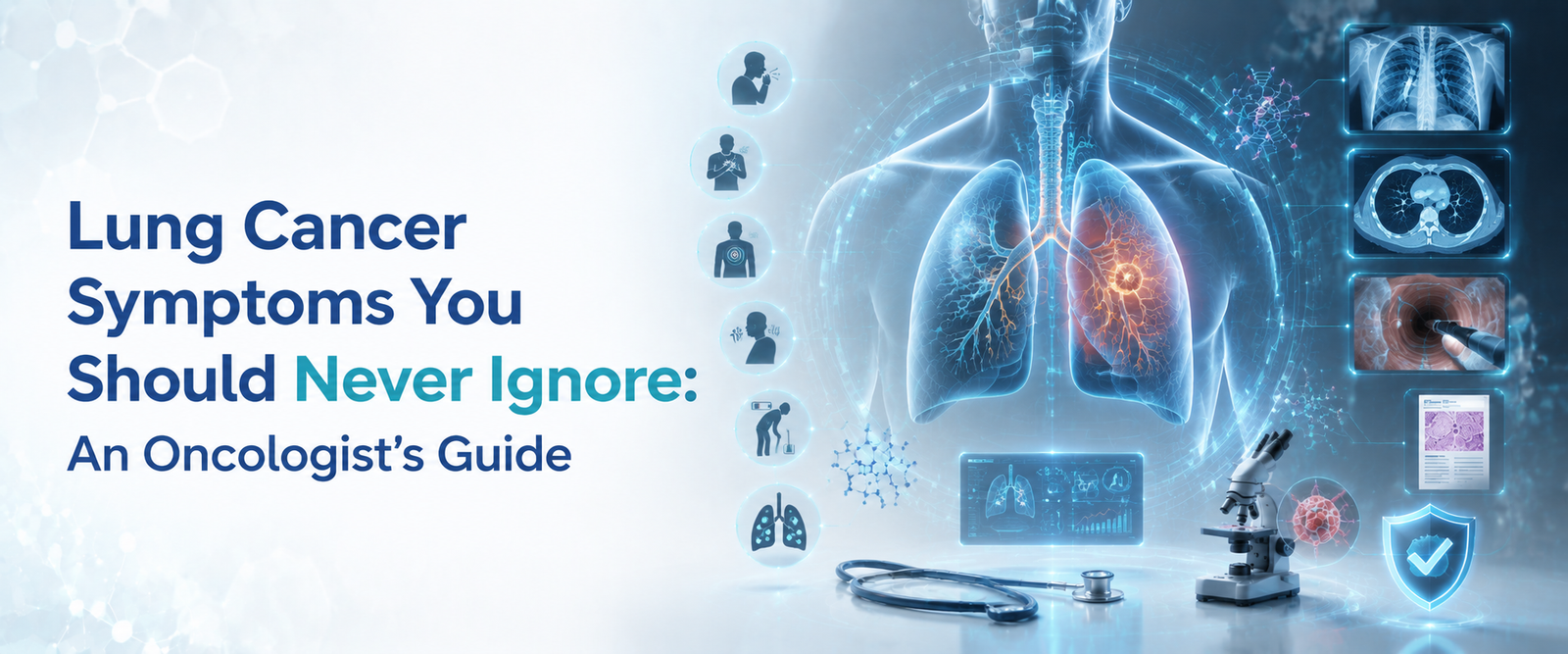
Lung Cancer Symptoms You Should Never Ignore: An Oncologist's Guide – premium medical illustration showing holographic lungs with advanced diagnostic imaging, AI-assisted analysis, CT scan, biopsy, and early lung cancer detection in a modern healthcare setting.

Summary

Lung cancer in India is not just a smoker's disease; a rising share of patients, particularly women and younger adults, have never smoked, and most are still diagnosed only after the disease has spread. This guide explains the early symptoms that get mistaken for routine respiratory illness, who is genuinely at risk, how lung cancer is staged and diagnosed, and when a symptom warrants a doctor's opinion rather than another round of home remedies. It is written to help you act on time, not to alarm you.

This content is for informational purposes only and does not constitute medical advice. Symptoms described here have many possible causes, most of them non-cancerous. Always consult a qualified doctor for diagnosis and treatment decisions.

Most people associate lung cancer with a single image: a lifelong smoker, an X-ray, a grim conversation. The reality in Indian clinics today looks different. A growing share of patients have never smoked a cigarette in their life; many are in their 40s rather than their 60s, and most are told the same thing: the disease was already advanced by the time it was found.

This guide is about the symptoms that get explained away. A cough blamed on pollution. Breathlessness blamed on age. Chest discomfort blamed on muscle strain. Lung cancer is treatable, and increasingly so, when it is caught while it is still confined to the lung. The problem has never really been the biology. It has been the delay.

Why lung cancer in India looks different now

Lung cancer is the most common cancer among Indian men and a growing one among Indian women, with incidence projected to keep climbing through this decade. What has changed is who gets it. Indian studies have found that a substantial proportion of patients diagnosed with non-small cell lung cancer have no smoking history at all, and the trend is most visible in younger patients and women, where air pollution, occupational exposure, and genetic factors are believed to play a larger role than tobacco.

This matters because it changes who should pay attention to symptoms. The instinct to dismiss a cough as “I don’t smoke, so it can’t be that” is exactly the instinct that delays diagnosis.

The harder fact is this: a large majority of Indian lung cancer patients are diagnosed at stage 3 or 4, when the cancer has already spread within the chest or to other organs. At that stage, treatment is still possible and often effective, but the goals of care and the range of options change considerably compared to disease caught early. 

You can read more about how the disease is treated at different stages on the lung cancer page. This is the gap this guide is meant to close. 

What are the early symptoms of lung cancer?

The early symptoms of lung cancer include a cough that does not go away, breathlessness on exertion, chest discomfort, recurring chest infections, unexplained fatigue, and a hoarse voice. None of these is unique to cancer, which is precisely why they are so often missed.

The symptoms worth tracking:

  • A cough lasting more than three weeks, or a long-standing cough that changes in character.
  • Coughing up blood or blood-streaked mucus, even a small amount.
  • Breathlessness that is new, or that occurs with less exertion than before.
  • Chest pain that is dull, persistent, or worsens with coughing or deep breathing.
  • Repeated chest infections or pneumonia in the same area of the lung.
  • A hoarse voice lasting more than a few weeks.
  • Unexplained loss of appetite or weight loss.
  • Fatigue that does not improve with rest.

A cough is the single most common first symptom, but it is also the most commonly dismissed, particularly in cities with poor air quality where a “smoker’s cough” or “Delhi cough” has become an accepted part of daily life. The detail that should change that thinking is that a cough caused by pollution or infection settles. A cough caused by a tumour tends to persist, often quietly worsening over weeks.

How is lung cancer different from a regular respiratory illness?

The difference lies in duration, response to treatment, and pattern. A chest infection responds to antibiotics within one to two weeks. A symptom caused by lung cancer typically does not resolve, may return in the same location, and tends to be accompanied by symptoms outside the chest, such as weight loss or fatigue.

Everyday respiratory symptom

Possible warning sign

Cough during a viral infection, clears in 1–2 weeks

Cough lasting beyond 3 weeks, or one that changes character

Breathlessness after intense exertion

Breathlessness with ordinary activity that is new for you

Chest tightness during a cold

Chest pain or discomfort that persists between illnesses

Voice strain after shouting or a cold

Hoarseness lasting several weeks with no clear cause

Pneumonia that clears fully with antibiotics

Pneumonia or chest infection that recurs in the same spot

If a respiratory symptom is not responding the way a routine infection should, that mismatch is the signal to seek further evaluation rather than a stronger course of the same treatment. 

Lung cancer is the leading cause of cancer-related deaths worldwide, and the World Health Organization notes that it is often diagnosed at advanced stages when treatment options are limited, which is exactly the gap early symptom recognition is meant to close.

Who is at higher risk of lung cancer in India?

Risk is higher in current and former smokers, those exposed to second-hand smoke, people with long-term occupational exposure to asbestos, silica, or industrial fumes, and increasingly, anyone with sustained exposure to high air pollution levels. A family history of lung cancer also raises risk independent of smoking status.

Tobacco remains the single largest risk factor, and this includes bidis and smokeless tobacco, not cigarettes alone. But the profile of an at-risk patient in India has widened:

  • Smokers and former smokers, including bidi users, who carry the highest individual risk.
  • Non-smokers with significant indoor or outdoor air pollution exposure, a factor increasingly implicated in lung cancers among women and younger adults in Indian cities.
  • People with occupational exposure to asbestos, diesel exhaust, silica dust, or certain industrial chemicals.
  • People with a first-degree relative who had lung cancer.
  • Those with pre-existing lung disease, such as chronic obstructive pulmonary disease (COPD) or pulmonary fibrosis.

A useful shift in thinking: smoking history should lower your threshold for getting a symptom checked, but a non-smoking history should never be a reason to ignore one.

What are the stages of lung cancer, and why does staging matter?

Lung cancer is staged from I to IV based on tumour size, lymph node involvement, and whether it has spread to other organs. Stages I and II generally describe disease confined to the lung and are often treatable with surgery. Stage III usually involves spread to nearby lymph nodes. Stage IV means the cancer has spread to distant organs such as the liver, bones, or brain.

Stage

What it generally means

Typical approach

I

Small tumour, confined to the lung

Often surgically removable

II

Larger tumour or limited nearby lymph node involvement

Surgery, often combined with other treatment

III

Spread to lymph nodes within the chest

Combination of chemotherapy, radiation, sometimes surgery

IV

Spread to distant organs

Systemic treatment: chemotherapy, targeted therapy, or immunotherapy based on tumour profile

Staging is not just a label; it is what determines whether surgery is even on the table. This is the central reason early symptom recognition matters so much: the difference between stage I and stage III is very often the difference between a curative surgery and a long-term systemic treatment plan.

How is lung cancer diagnosed?

Diagnosis usually begins with a chest X-ray or CT scan when symptoms raise suspicion, followed by a biopsy to confirm cancer and identify its type. Further tests, including PET scans and molecular profiling of the tumour, help determine the stage and guide treatment selection. 

You can read more about this process on the cancer diagnostics page

A typical pathway looks like this:

  1. Imaging: A chest X-ray is often the first step, but a CT scan gives far more detail and is usually needed if symptoms persist
  2. Biopsy: A  tissue sample, usually obtained via bronchoscopy or a needle biopsy, confirms whether a suspicious finding is cancer and what type
  3. Staging scans: PET-CT and sometimes MRI of the brain to check whether the cancer has spread
  4. Molecular and genetic testing: Testing the tumour for mutations such as EGFR, ALK, and ROS1, which is particularly relevant in Indian patients, since non-smoking lung cancers here show a meaningfully higher rate of these targetable mutations

This last step has changed lung cancer treatment considerably. A tumour with an identifiable driver mutation can often be treated with targeted therapy instead of or alongside chemotherapy, with a different side-effect profile and, in many cases, better disease control. 

Tumours without a targetable mutation may instead be candidates for immunotherapy, depending on the tumour’s biomarker profile. 

Does low-dose CT screening make sense for you?

Low-dose CT screening is recommended internationally for long-term heavy smokers in a defined age range, and it has been shown to reduce lung cancer deaths in this group by catching disease earlier. Its role in lifelong non-smokers in India is still being studied and is not currently a standard recommendation, even though non-smoker lung cancer is rising here.

This is a conversation worth having directly with an oncologist if you have a heavy smoking history, a strong family history, or significant occupational exposure, rather than deciding for yourself whether you qualify.

When should you see a doctor?

You should see a doctor if a respiratory symptom lasts beyond three weeks, if you cough up any blood, if breathlessness is new or worsening, or if a chest infection keeps returning in the same location. You do not need to wait for pain, which is often a late symptom rather than an early one.

  • Cough lasting more than 3 weeks: Get a chest X-ray or CT evaluated by a doctor
  • Any amount of blood in cough or sputum: See a doctor promptly; do not wait
  • New or worsening breathlessness: Get evaluated, especially if there’s no clear cause
  • Chest infection that returns in the same spot: Ask specifically about imaging beyond an X-ray
  • Long-term smoker or strong family history: Lower your threshold for any persistent symptom

The takeaway

Lung cancer’s reputation as a smoker’s disease has quietly stopped matching the patients walking into Indian clinics. The symptoms are familiar and easy to explain away: a cough, some breathlessness, a tired stretch of weeks. What separates a routine illness from a warning sign is rarely intensity. It is duration and pattern.

If a respiratory symptom has outlasted three weeks, or doesn’t behave the way you’d expect an infection to, that is reason enough for an opinion, not a diagnosis to fear.

To discuss persistent respiratory symptoms or seek a specialist’s opinion, you can book a consultation with Dr Aditya Sarin at Sir Ganga Ram Hospital in New Delhi.

Frequently Asked Questions

Can a non-smoker get lung cancer?

Yes. A meaningful and growing share of lung cancer patients in India have never smoked, particularly women and younger adults, with air pollution and genetic factors playing a larger role in this group.

Is a persistent cough always a sign of lung cancer?

No. Most persistent coughs are caused by allergies, post-viral irritation, acid reflux, or chronic bronchitis. But a cough lasting more than three weeks, especially one that is new or changing, should be evaluated rather than assumed.

Does lung cancer cause pain in the early stages?

Usually not. Chest pain tends to appear later, once a tumour is larger or has affected nearby structures. This is part of why early lung cancer is so often missed; there is frequently nothing that hurts.

What is the difference between a chest X-ray and a CT scan for lung symptoms?

A chest X-ray can miss small or early tumours. A CT scan provides far greater detail and is usually the next step if symptoms persist despite a normal X-ray or initial treatment.

Can lung cancer be cured if caught early?

Early-stage lung cancer, confined to the lung, is often treatable with surgery and carries a meaningfully better outlook than disease diagnosed after it has spread. This is the central reason early evaluation matters.