

Header
Sir Ganga Ram Hospital, New Delhi

Can Cancer Be Cured? What the Evidence Shows

Summary

Cancer can be cured in many cases, and cure rates have been rising steadily, with the overall five-year relative survival rate for all cancers combined in the United States now at 70 per cent, up from about 50 per cent in the mid-1970s. Doctors more often use terms like remission and no evidence of disease rather than cure, since even a clear scan cannot rule out cancer cells returning later.

Outcomes vary enormously by cancer type, stage at diagnosis, and access to treatment, which is also why cancer survival in India, while improving, still lags behind high-income countries. Stage 4 cancer is harder to cure but not automatically incurable, since outcomes depend heavily on the specific cancer type.

Can cancer be cured? What the evidence actually says

Understanding cure, remission and survival rates, and what the latest data shows

This page is for informational purposes only and does not replace medical advice. Whether a specific cancer can be cured depends on its type, stage and how it responds to treatment, so please consult Dr Aditya Sarin or a qualified oncologist for guidance specific to your diagnosis. As of 2026, this reflects the most recently published data available.

“Can cancer be cured” sounds like a simple yes or no question, but the honest answer depends heavily on which cancer, at what stage, and in which part of the world it is diagnosed and treated. Here is what the evidence actually shows, how doctors define cure versus remission, and why survival rates look different in India than in the data most people encounter online.

What “cure” actually means in cancer care

According to the American Cancer Society, a cure means there are no traces of cancer after treatment and it is not expected to come back. The complication is that doctors cannot fully guarantee this, since cancer cells too few to detect on any scan can sometimes remain and cause a recurrence years later. Most recurrences happen within five years of treatment, though later recurrence is still possible for some cancers.

This is why doctors more often use the word remission instead of cure. Complete remission means all signs of cancer are gone, and cancer cells cannot be found on any test. Partial remission means the cancer has shrunk but not disappeared entirely. Patients may also hear the term NED, or no evidence of disease, which conveys the same idea: nothing detectable right now, without a lifetime guarantee attached.

Why doctors talk about survival rates instead of cure

Because doctors cannot confirm an individual cure with certainty at the time of treatment, they track five-year relative survival rates, which measure the percentage of people with a given cancer who are still alive five years after diagnosis, compared with people in the general population of the same age and sex. It is a population statistic, not a personal prediction, so it does not tell any one patient exactly what will happen.

Five years is used as a benchmark because most cancer recurrences happen within that window, so surviving past it is a reasonably strong, though not absolute, sign that the cancer is unlikely to return in many cancer types.

Cancer cure rates have been rising

Cancer survival has genuinely improved over time, and the most recent data confirms this trend is continuing rather than plateauing.

According to the American Cancer Society’s 2026 Cancer Statistics Report, the five-year relative survival rate for all cancers combined, for people diagnosed between 2015 and 2021 in the United States, reached 70 per cent, up from about 50 per cent in the mid-1970s. Importantly, these gains have not come only from cancers that were already easy to treat. The report highlights substantial improvement specifically in advanced and historically fatal cancers.

Cancer type

5-year relative survival, mid-1990s

5-year relative survival, most recent data

All cancers, distant stage

17 percent

35 percent

Myeloma

32 percent

62 percent

Liver cancer

7 percent

22 percent

Lung cancer, distant stage

2 percent

10 percent

Lung cancer, regional stage

20 percent

37 percent

Source: American Cancer Society, 2026 Cancer Statistics Report.

Overall cancer mortality in the United States has dropped by 34 per cent since its peak in 1991, which the report attributes to a combination of earlier detection, better treatment, and declining smoking rates, translating to an estimated 4.8 million cancer deaths averted through 2023.

Can stage 4 cancer be cured?

Stage 4, meaning the cancer has spread to distant parts of the body, is generally harder to cure than earlier stages, but it does not automatically mean a cancer is incurable, and this is one of the more commonly misunderstood points in cancer care.

Testicular cancer is a clear example. According to the American Cancer Society, even distant-stage testicular cancer, where it has spread to organs such as the lungs or liver, has a five-year relative survival rate of 72 per cent, largely because it responds unusually well to chemotherapy compared with most other cancer types. This is very different from distant-stage pancreatic or lung cancer, where outcomes remain considerably harder, even though all three are technically described as stage 4.

This is why a stage 4 diagnosis must be discussed in the context of the specific cancer type, its biology, and how it has responded to treatment so far, rather than treated as a single outcome that applies equally across all cancers.

Cancer survival in India

Cancer survival in India has been improving, but a meaningful gap with high-income countries remains, and the gap is closely tied to when cancers are actually caught.

A 2024 study published in the journal Cancer, led by researchers under India’s National Cancer Registry Programme, tracked 17,331 women diagnosed with breast cancer between 2012 and 2015 across 11 population-based cancer registries in India. The overall five-year survival rate was 66.4 per cent, compared with more than 90 per cent typically reported in the United States for breast cancer overall. The study also found striking regional variation within India itself, ranging from 74.9 per cent in Mizoram to as low as 41.9 per cent in Pasighat, Arunachal Pradesh, a gap the researchers linked largely to differences in how early cancers are diagnosed and how consistently patients can access treatment.

This regional gap reminds us that cure and survival statistics are not fixed biological facts. They reflect how early a cancer is caught and how reliably a patient can access appropriate treatment, both of which can be improved.

The takeaway

Cancer can often be cured, and outcomes have improved substantially even for advanced and historically difficult cancers, but “can cancer be cured” is not a single answer. It depends on the specific cancer type, the stage at diagnosis, and access to timely, appropriate treatment. If you or someone close to you has been diagnosed with cancer and wants a clear understanding of what the evidence says for that specific diagnosis, book a consultation with Dr Aditya Sarin at Sir Ganga Ram Hospital, New Delhi, or request a second opinion on an existing diagnosis and treatment plan.

References

  1. American Cancer Society: Can Cancer Be Cured? Does Treatment Cure Cancer?
  2. American Cancer Society: 2026 Cancer Statistics Report
  3. American Cancer Society: Survival Rates for Testicular Cancer
  4. Sathishkumar K, et al. Breast cancer survival in India across 11 geographic areas under the National Cancer Registry Programme. Cancer. 2024. Reported via The Print

Frequently Asked Questions

What is the difference between cancer remission and cancer cure?

Cure means doctors expect the cancer will not return, but this cannot be fully guaranteed at the time of treatment. Remission means the cancer has responded to treatment, either completely, with no detectable signs, or partially, with the cancer shrunk but still present, without stating that it will never return.

Does a 5-year survival rate mean a patient only has 5 years to live?

No. A 5-year relative survival rate measures the percentage of people alive 5 years after diagnosis compared with the general population, using 5 years as a statistical checkpoint rather than a limit. Many patients who pass this milestone live for decades afterwards.

Is stage 4 cancer always terminal?

No. Stage 4 means the cancer has spread to distant parts of the body, and it is generally harder to treat than earlier stages, but outcomes vary enormously by cancer type. Some stage 4 cancers, such as testicular cancer, still have relatively high cure rates because they respond well to available treatments.

Why is cancer survival lower in India than in the United States?

Indian studies attribute this mainly to later-stage diagnosis and inconsistent access to timely treatment across regions, rather than the cancers themselves behaving differently. Regional data from India show survival rates varying by more than 30 percentage points depending on where a patient is diagnosed and treated.

Can cancer come back after being in remission?

Yes. Most recurrences happen within five years of treatment, which is why that period is used as a key survival benchmark, though later recurrence remains possible for some cancer types. This is also why follow-up care continues even after a patient is in complete remission.

Dr. Aditya Sarin — Medical Oncologist, Sir Ganga Ram Hospital, Delhi
Medically reviewed & written by

Dr. Aditya Sarin

Consultant, Medical Oncology · Sir Ganga Ram Hospital, New Delhi

MD (General Medicine) · DrNB (Medical Oncology) · ESMO (European) Board Certified

Dr. Aditya Sarin is a medical oncologist who combines precision molecular profiling with evidence-based, compassionate cancer care. Named Young Medical Oncologist of the Year, he treats the full spectrum of solid and blood cancers through a multidisciplinary tumor-board approach at Sir Ganga Ram Hospital.
Breast Cancer Lung Cancer GI Cancers Head & Neck Gynecologic Cancers Immunotherapy Targeted Therapy Precision / Molecular Oncology Leukemia · Lymphoma · Myeloma

Chemotherapy Cost in India: A Realistic 2026 Guide

Summary

Chemotherapy cost in India varies widely and depends on the cancer type, the specific drugs used, whether treatment is at a government or private hospital, and how many cycles are needed. Conventional chemotherapy drugs are generally far less expensive than newer targeted therapies or immunotherapy, and oral chemotherapy can sometimes cost a fraction of intravenous regimens.

Government schemes such as Ayushman Bharat and customs duty exemptions on select cancer drugs have reduced costs for many patients, but out-of-pocket spending, including non-medical costs like travel and accommodation, remains a significant burden for Indian families. This page explains the main cost drivers and where to find financial support, but you must confirm exact costs with your treating hospital.

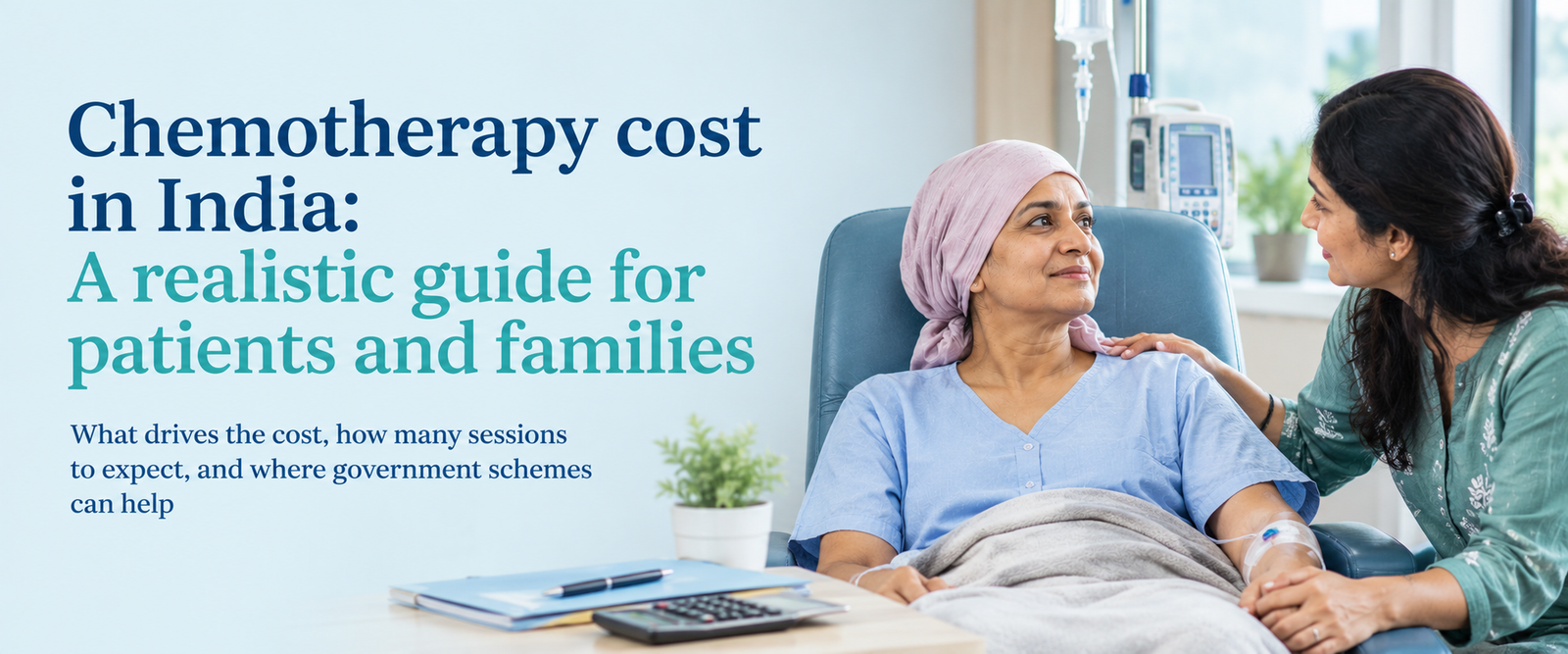
Chemotherapy cost in India: A realistic guide for patients and families

What drives the cost, how many sessions to expect, and where government schemes can help

This page is for informational purposes only and does not replace medical or financial advice. Chemotherapy costs vary by patient, hospital and treatment protocol, so please consult Dr Aditya Sarin or your treating oncologist and hospital billing team for an actual estimate specific to your case. As of 2026, figures reflect the most recent published data available and should be treated as indicative rather than fixed prices.

One of the first questions most families ask after a cancer diagnosis is what treatment will actually cost. Chemotherapy is rarely a single, one-time expense. It usually runs across several months and multiple cycles, and the total bill depends on more variables than most people expect. Here is a realistic look at what shapes chemotherapy cost in India, how many sessions are typically involved, and what support exists for patients who cannot bear the full cost themselves, alongside guidance on choosing where to get treated from Dr Aditya Sarin’s page on choosing the right cancer treatment hospital in India.

What determines the cost of chemotherapy

Chemotherapy cost isn’t fixed because several factors shape the final bill.

The type of cancer and the specific regimen prescribed matter most, since some drug combinations are older and off-patent, while others are newer, patented, or biologic in nature and cost considerably more. Whether treatment involves conventional chemotherapy alone or is combined with targeted therapy or immunotherapy changes the cost substantially, since targeted and immunotherapy drugs are generally the most expensive part of modern cancer treatment.

The type of hospital also matters. Government hospitals and Regional Cancer Centres often provide chemotherapy at little or no direct cost to eligible patients, while private hospitals charge separately for drugs, hospital stays, nursing care, and monitoring. According to a narrative review published in the Journal of Family Medicine and Primary Care in 2023, medicines alone account for 40 to 50 per cent of total out-of-pocket cancer care expenses in India, with diagnostic tests and consultation fees adding further to the bill.

The number of cycles required, whether the patient needs admission or can be treated as a day-care outpatient, and whether complications arise during treatment all add to or reduce the total cost.

How many chemotherapy sessions are usually needed

The number of chemotherapy sessions, referred to as cycles, depends entirely on the type and stage of cancer, the drug regimen, and how the patient responds to treatment. No single number applies across all cancers.

Most standard protocols are given in cycles ranging from four to eight, with each cycle typically spaced two to four weeks apart to allow the body to recover between doses. Some cancers require a shorter course, while others, particularly in the metastatic or advanced setting, may involve ongoing treatment for as long as it controls the disease and side effects stay manageable. This is a decision the treating oncologist makes and regularly reassesses based on scans, blood counts, and how the patient is tolerating treatment, not a fixed schedule set in advance.

Chemotherapy cost per cycle: why there is no single answer

Because chemotherapy cost depends on so many variables, a single average cost per cycle for India as a whole is difficult to state reliably, and figures circulating online often reflect one hospital’s marketing pricing rather than a verified national average.

One frequently cited academic estimate, from a 2013 costing study by Wani et al., found that the average unit cost per patient per bed day for in-patient chemotherapy was approximately Rs 5,725, with patients bearing around 40 per cent of drug costs out of pocket even in that setting. This figure is now more than a decade old and reflects costs at the time of the study, so read it as historical context on cost structure rather than a current price. Newer targeted and immunotherapy-based regimens introduced since then generally cost substantially more per cycle than the conventional chemotherapy drugs covered in that estimate.

The most reliable way to know the actual cost per cycle for a specific diagnosis is a written estimate from the treating hospital, since it will reflect the current drug regimen, hospital charges, and any government scheme the patient qualifies for.

Oral chemotherapy cost

Oral chemotherapy, taken as tablets rather than given through an intravenous infusion, can be considerably less expensive than IV chemotherapy for certain cancers, and it also removes the cost and time associated with day-care hospital visits for each dose.

A notable Indian example comes from a study published in the Indian Journal of Surgical Oncology in 2021, which tested a low-cost, home-based oral metronomic chemotherapy protocol, combining oral methotrexate with celecoxib, in 60 patients with advanced oral cancer. The regimen cost about Rs 700 per month, was fully affordable and well tolerated among enrolled patients, and made 43.3 per cent of them surgically resectable after treatment. This is a specific low-cost protocol for a specific cancer type, not a cost figure that applies to oral chemotherapy in general, since oral targeted therapy drugs used for other cancers can cost far more per month. Whether an oral option exists and is appropriate depends entirely on the cancer type and should be discussed with the treating oncologist.

Government schemes that reduce the cost

Several government measures currently help reduce the financial burden of chemotherapy in India.

Scheme or measure

What it covers

Ayushman Bharat, PM-JAY

Provides chemotherapy, radiotherapy and surgical oncology coverage for eligible economically vulnerable families, with the government reporting that over 90 per cent of registered cancer patients under the scheme had begun treatment as of 2024

Health Minister’s Cancer Patient Fund

Offers financial assistance of up to Rs 5 lakh, extendable to Rs 15 lakh in eligible cases, for patients below the poverty line, distributed through 27 Regional Cancer Centres

2025-26 Union Budget customs duty exemption

Exempted 36 life-saving cancer drugs from basic customs duty and reduced six additional cancer medicines to a concessional 5 per cent duty rate, aimed at lowering drug costs

Day Care Cancer Centres

Government has targeted 200 additional day-care cancer centres in district hospitals for 2025-26, intended to expand access and reduce the need for costly travel to tertiary centres

Source: Press Information Bureau, Government of India, fact sheet on government schemes for cancer care.

Eligibility rules and empanelled hospital lists change periodically, so patients should confirm current coverage directly through the Ayushman Bharat helpline or the treating hospital’s insurance desk.

The real burden: out-of-pocket and non-medical costs

Even where government schemes reduce direct treatment costs, cancer care in India still places a substantial financial burden on many families, and a meaningful part of that burden is not the chemotherapy drug itself.

A study of 474 solid cancer patients at a Regional Cancer Centre in South India, where diagnostics and treatment were free for eligible patients, found the average total out-of-pocket expenditure was still Rs 24,374.8 per patient, and that 96 per cent of this fell in the direct non-medical category, covering travel, accommodation and food during repeated hospital visits, rather than direct medical costs. Out-of-pocket spending was notably higher for male patients, at Rs 35,817, compared with Rs 20,496 for female patients in the same study.

More broadly, the Journal of Family Medicine and Primary Care review cited earlier notes that catastrophic health expenditure, meaning healthcare costs that exceed 40 per cent of a household’s capacity to pay, affected an estimated 61.6 per cent of cervical cancer patients in one Indian study, with around 30 per cent of affected families resorting to distress financing such as borrowing or selling assets. This is why planning for the full cost of treatment, including indirect costs, matters as much as understanding the price of the chemotherapy itself.

The takeaway

Chemotherapy cost in India depends on the cancer type, the drugs used, the hospital, and the number of cycles required, and no single figure applies to every patient. Government schemes and low-cost treatment protocols have improved affordability in specific situations, but non-medical costs during treatment remain a real and often underestimated part of the total burden. For a clear, personalised understanding of your treatment plan and likely cost, book a consultation with Dr Aditya Sarin at Sir Ganga Ram Hospital, New Delhi, or request a second opinion on an existing treatment plan and its cost. 

References

  1. Press Information Bureau, Government of India. Towards a Cancer-Free India. https://www.pib.gov.in/FactsheetDetails.aspx?Id=149131&reg=48&lang=2
  2. Muralidharan S, Gore M, Katkuri S. Cancer care and economic burden, a narrative review. Journal of Family Medicine and Primary Care. 2023;12(12):3042-3047. https://pmc.ncbi.nlm.nih.gov/articles/PMC10866236/
  3. Maurya PK, Murali S, Jayaseelan V, Thulasingam M, Jagadesan P. Economic burden of solid cancer treatment in South India, out-of-pocket expenditure and catastrophic health expenditure. https://pmc.ncbi.nlm.nih.gov/articles/PMC9080359
  4. Study on home-based oral metronomic chemotherapy in advanced oral cancer. Indian Journal of Surgical Oncology. 2021;12:67-72. https://link.springer.com/doi/10.1007/s13193-020-01247-8

Frequently Asked Questions

What is the average cost of one chemotherapy cycle in India?

There is no single reliable average, since cost depends heavily on the cancer type, the drugs used, and the hospital. The only accurate way to know the cost for a specific case is a written estimate from the treating hospital, based on the prescribed regimen.

Is chemotherapy free under Ayushman Bharat?

Ayushman Bharat PM-JAY covers chemotherapy, radiotherapy and surgical oncology for eligible economically vulnerable families at empanelled hospitals, though coverage should be confirmed directly, since scheme rules and hospital lists change periodically.

Is oral chemotherapy always cheaper than IV chemotherapy?

Not always. Some low-cost oral regimens exist for specific cancers, but newer oral targeted therapy drugs used for other cancers can cost as much as, or more than, intravenous chemotherapy. Whether an oral option exists depends entirely on the cancer involved.

Beyond drug costs, what other expenses should families plan for?

Studies from Indian cancer centres consistently show non-medical costs, including travel, accommodation and time away from work for repeated hospital visits, can make up the majority of a family’s total out-of-pocket spending, even when the treatment itself is subsidised or free.

Dr. Aditya Sarin — Medical Oncologist, Sir Ganga Ram Hospital, Delhi
Medically reviewed & written by

Dr. Aditya Sarin

Consultant, Medical Oncology · Sir Ganga Ram Hospital, New Delhi

MD (General Medicine) · DrNB (Medical Oncology) · ESMO (European) Board Certified

Dr. Aditya Sarin is a medical oncologist who combines precision molecular profiling with evidence-based, compassionate cancer care. Named Young Medical Oncologist of the Year, he treats the full spectrum of solid and blood cancers through a multidisciplinary tumor-board approach at Sir Ganga Ram Hospital.

Breast Cancer Lung Cancer GI Cancers Head & Neck Gynecologic Cancers Immunotherapy Targeted Therapy Precision / Molecular Oncology Leukemia · Lymphoma · Myeloma

HER2-Positive Breast Cancer: Treatment and Prognosis

Summary

HER2-positive breast cancer is a type in which the cancer cells make too much of a growth-promoting protein called HER2. It accounts for about 15 to 20 per cent of breast cancers and tends to grow faster than HER2-negative disease, but it also responds well to drugs that specifically target HER2, such as trastuzumab.

In US data, five-year relative survival is 91.0 per cent for hormone receptor-positive, HER2-positive disease and 85.6 per cent for hormone receptor-negative, HER2-positive disease. In India, the cost of HER2-targeted drugs has been a real barrier for many patients, and lower-cost biosimilar versions have meaningfully improved access.

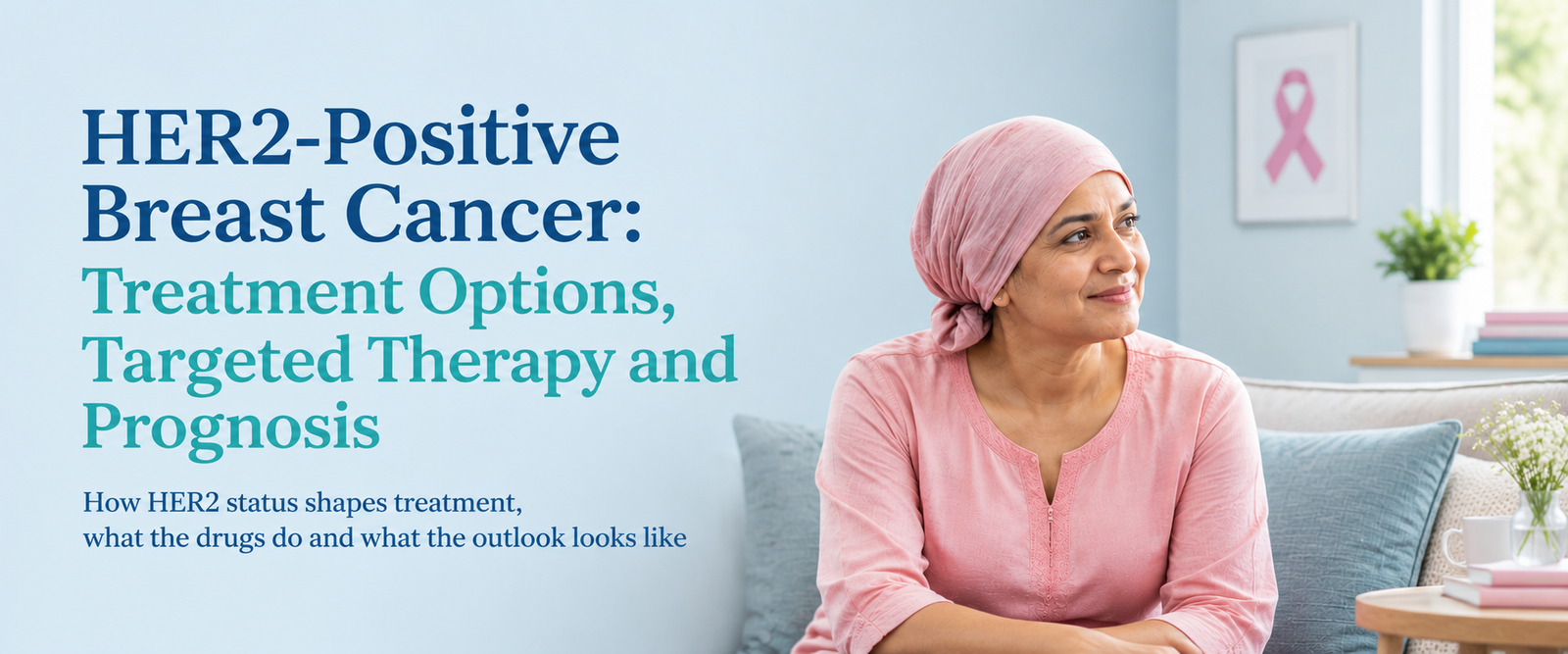
HER2-Positive Breast Cancer: Treatment Options, Targeted Therapy and Prognosis

How HER2 status shapes treatment, what the drugs do and what the outlook looks like 

This page is for informational purposes only and does not replace medical advice. Please consult Dr. Aditya Sarin or a qualified oncologist to understand what your HER2 result means for your specific treatment. As of 2026, this reflects current clinical guidance.

A breast cancer diagnosis usually comes with a pathology report full of unfamiliar terms, and HER2 status is one of the first things it lists. It is not just a lab detail. It changes which drugs are likely to work and how the treatment plan is built from the start. Here is what HER2-positive breast cancer means, how it is tested, the targeted therapies used, and what current survival data shows.

What HER2-positive breast cancer means

HER2, short for human epidermal growth factor receptor 2, is a protein on the surface of breast cells that helps control how they grow and divide. In HER2-positive breast cancer, cells have extra copies of the HER2 gene and produce far more of this protein than normal, which drives faster growth than HER2-negative cancer cells.

According to the American Cancer Society, HER2-positive disease accounts for roughly 15 to 20 percent of all breast cancers. It was once associated with a poorer prognosis, but that changed once drugs designed specifically to block HER2 became part of standard treatment, which is why identifying HER2 status at diagnosis matters so much.

How HER2 status is tested

HER2 status is determined from a tumour sample, usually taken during a biopsy or surgery, using one or both of two tests. Immunohistochemistry, or IHC, measures how much HER2 protein sits on the cell surface and gives a score from 0 to 3+. Fluorescence in situ hybridisation, or FISH, counts the actual number of HER2 gene copies and reports positive or negative.

IHC and FISH result

How it is classified

IHC 0, no membrane staining

HER2-negative

IHC 0 with faint, incomplete membrane staining

HER2-low or HER2-ultralow

IHC 1+, or IHC 2+ with a negative FISH

HER2-low

IHC 3+, or IHC 2+ with a positive FISH

HER2-positive

This matters because HER2-low, once grouped with HER2-negative disease, is now recognised as its own category that can respond to certain HER2-targeted antibody-drug conjugates, even though it falls short of the threshold for standard HER2-positive therapy.

Breast cancer molecular subtypes

HER2 status is one of two receptor results, alongside hormone receptor status, that together define the molecular subtype of a breast cancer. This subtype drives treatment decisions more than HER2 status alone.

Subtype

Hormone receptor and HER2 status

General treatment direction

HR-positive, HER2-negative

Hormone receptor positive, HER2 negative

Hormone therapy, often with chemotherapy depending on risk

Triple-positive

Hormone receptor positive, HER2 positive

HER2-targeted therapy plus hormone therapy, often with chemotherapy

HR-negative, HER2-positive

Hormone receptor negative, HER2 positive

HER2-targeted therapy plus chemotherapy

Triple-negative

Hormone receptor negative, HER2 negative

Chemotherapy, with immunotherapy in select cases

HER2-targeted therapy and trastuzumab

Targeted therapy against HER2 works by blocking the receptor or delivering treatment directly to HER2-expressing cells, largely sparing normal cells that do not overexpress the protein. Trastuzumab, sold under brand names including Herceptin, was the first such drug and remains central to treatment.

Drug category

Examples

Monoclonal antibodies

Trastuzumab, pertuzumab, margetuximab

Antibody-drug conjugates

Ado-trastuzumab emtansine, trastuzumab deruxtecan

Kinase inhibitors

Lapatinib, neratinib, tucatinib

These drugs are typically combined with chemotherapy, and the exact combination depends on whether the cancer is early stage or metastatic. According to the American Cancer Society, common side effects include diarrhoea, liver enzyme changes, and hand-foot syndrome with some agents, while the most significant risk with trastuzumab-based therapy is a reduction in heart function, monitored periodically with an echocardiogram or a MUGA scan. These drugs can also harm a developing fetus, so contraception during treatment is generally advised. 

Dr Aditya Sarin’s targeted therapy service page explains how targeted drugs are selected, and the breast cancer page covers the condition in full.

HER2 targeted therapy in India

Cost has historically limited access to HER2-targeted therapy in India, since a full course of trastuzumab can last a year and originator pricing has put it out of reach for many patients. Biosimilar trastuzumab, a highly similar, government-approved, lower-cost version of the original biologic drug, has changed that picture considerably.

A study from Christian Medical College, Vellore, published in ecancermedicalscience in 2021, looked at 135 breast cancer patients receiving neoadjuvant, meaning pre-surgery, chemotherapy with trastuzumab. Even with biosimilar availability, 23 per cent of patients in the study still could not afford trastuzumab. Among those who received it, the pathological complete response rate, meaning no detectable cancer remained at surgery, was 37.6 percent overall, with 41.7 percent in patients who received a biosimilar compared with 28.5 percent in those who received the originator drug. Three-year disease-free survival was 87.1 per cent, and overall survival was 92.2 per cent in this cohort.

This is data from a single tertiary-care centre, not a national benchmark, but it shows two things clearly: biosimilars have made trastuzumab reachable for more patients in India, and affordability still decides whether a meaningful share of patients can access guideline-recommended treatment at all.

HER2-positive breast cancer prognosis

Survival statistics are population averages. They describe outcomes across large groups of patients and do not predict what will happen to any individual patient. The table below shows five-year relative survival by breast cancer molecular subtype, based on National Cancer Institute SEER data for cases diagnosed between 2013 and 2019 in the United States. 

Subtype

All stages

Localized

Regional

Distant

HR-positive, HER2-negative

94.8%

100.0%

90.2%

34.0%

HR-positive, HER2-positive

91.0%

99.1%

89.8%

45.6%

HR-negative, HER2-positive

85.6%

97.2%

84.0%

39.5%

Triple-negative

77.6%

91.8%

66.2%

12.8%

Two things stand out. First, HER2-positive disease no longer carries the poorest prognosis among the major subtypes, reflecting how much targeted therapy has changed outcomes since trastuzumab became standard of care. Second, stage at diagnosis still matters enormously within every subtype, which is why early detection remains important even for a subtype that responds well to treatment.

The takeaway

HER2-positive breast cancer used to carry one of the more difficult prognoses among breast cancer subtypes. Targeted therapies aimed directly at the HER2 protein have changed that considerably, and in India, biosimilar trastuzumab has made this treatment reachable for more patients than it once was. If you have received a HER2-positive diagnosis or want an independent review of your test results and treatment plan, you can book a consultation with Dr Aditya Sarin.

References

  1. American Cancer Society. Breast Cancer HER2 Status. https://www.cancer.org/cancer/types/breast-cancer/understanding-a-breast-cancer-diagnosis/breast-cancer-her2-status.html
  2. American Cancer Society. Targeted Therapy for Breast Cancer. https://www.cancer.org/cancer/types/breast-cancer/treatment/targeted-therapy-for-breast-cancer.html
  3. National Cancer Institute. Breast Cancer Prognosis and Survival Rates by Subtype. https://www.cancer.gov/types/breast/survival
  4. Joel A, Georgy JT, Thumaty DB, et al. Neoadjuvant chemotherapy with biosimilar trastuzumab in HER2-positive breast cancer: real-world experience from a tertiary care centre in India. ecancermedicalscience. 2021;15:1207. https://ecancer.org/en/journal/article

Frequently Asked Questions

What does it mean if my breast cancer is HER2-positive?

It means the cancer cells have extra copies of the HER2 gene and make more HER2 protein than normal, which tends to speed up growth but also makes the cancer a strong candidate for HER2-targeted drugs such as trastuzumab.

Is HER2-positive breast cancer more dangerous than HER2-negative breast cancer?

Not in the way it once was. Before targeted therapy existed, HER2-positive disease had a poorer prognosis, but with trastuzumab and related drugs now standard, outcomes are comparable to, or better than, several other subtypes.

Can HER2-positive breast cancer be cured?

Many early-stage cases are treated with curative intent using surgery, HER2-targeted therapy and often chemotherapy. Metastatic HER2-positive disease is generally managed as a long-term condition rather than a curable one, though some patients live for many years on treatment.

Are biosimilar trastuzumab drugs as effective as the original?

Biosimilars are approved based on their high similarity to the original biologic in safety and effectiveness. Indian data, including from the CMC Vellore study above, have shown comparable or favourable outcomes, and biosimilars have substantially improved affordability and access to this treatment in India.

Dr. Aditya Sarin — Medical Oncologist, Sir Ganga Ram Hospital, Delhi
Medically reviewed & written by

Dr. Aditya Sarin

Consultant, Medical Oncology · Sir Ganga Ram Hospital, New Delhi

MD (General Medicine) · DrNB (Medical Oncology) · ESMO (European) Board Certified

Dr. Aditya Sarin is a medical oncologist who combines precision molecular profiling with evidence-based, compassionate cancer care. Named Young Medical Oncologist of the Year, he treats the full spectrum of solid and blood cancers through a multidisciplinary tumor-board approach at Sir Ganga Ram Hospital.

Breast Cancer Lung Cancer GI Cancers Head & Neck Gynecologic Cancers Immunotherapy Targeted Therapy Precision / Molecular Oncology Leukemia · Lymphoma · Myeloma