
Header
Sir Ganga Ram Hospital, New Delhi

Cancer Prevention in India: Evidence-Based Steps to Know

Summary

Between 30 and 50 per cent of cancer cases worldwide are preventable, largely through tobacco control, alcohol reduction, vaccination against cancer-causing infections, and maintaining a healthy weight. In India specifically, tobacco use remains the single largest driver of preventable cancer, linked to nearly half the world's oral cancer cases. Screening for cancers like breast, cervical, and oral cancer adds a second layer of protection by catching what prevention alone can't stop.

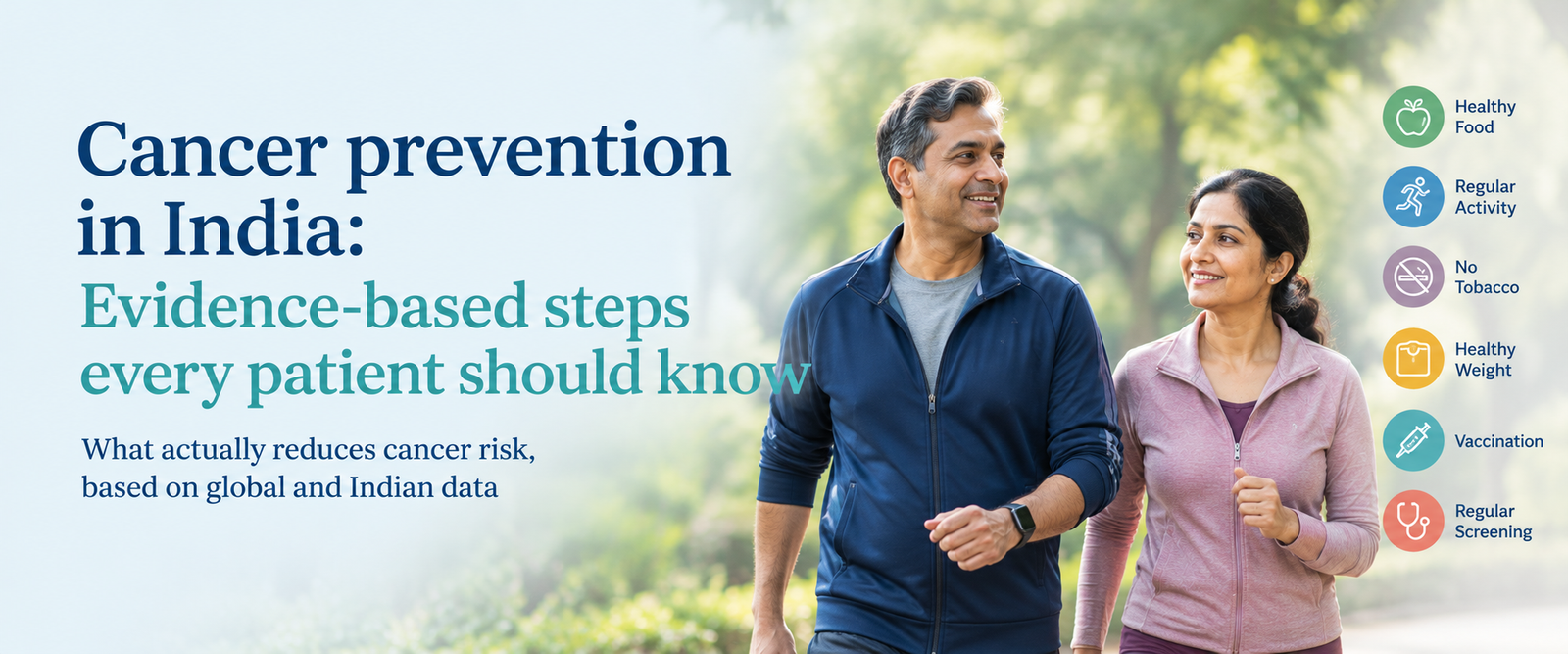
Cancer prevention in India: Evidence-based steps every patient should know

What actually reduces cancer risk, based on global and Indian data

This page is for informational purposes only and does not replace medical advice. Please consult Dr Aditya Sarin or a qualified oncologist for guidance specific to your risk profile. As of 2026, this reflects current clinical guidance.

Cancer prevention advice often gets lost between two extremes: vague reassurance that “healthy living” helps, or fear-driven lists of things to avoid. The reality sits in between, and it’s more actionable than either extreme suggests. A meaningful share of cancer cases trace back to a small number of well-understood, modifiable factors, and addressing them is the single most cost-effective long-term strategy available against the disease.

How much cancer is actually preventable

According to the World Health Organization, between 30 and 50 per cent of all cancer cases are preventable, primarily by reducing exposure to a defined set of risk factors and by vaccinating against cancer-causing infections. This isn’t a small margin. It represents millions of cases globally that current knowledge, not future breakthroughs, could prevent.

The WHO identifies several major categories driving this preventable burden: tobacco use, alcohol consumption, physical inactivity and excess weight, cancer-causing infections, environmental and occupational exposures, and radiation, including excessive sun exposure. Each carries a different weight by region and population.

Tobacco: The single largest preventable cause

Tobacco use is, by a wide margin, the leading avoidable cause of cancer worldwide. Tobacco smoke contains more than 7,000 chemicals, at least 69 of which are known carcinogens, and tobacco use is the single greatest avoidable risk factor for cancer death globally.

India’s burden here is significant and distinctive. According to the Government of India’s Global Adult Tobacco Survey, 28.6 per cent of Indian adults, roughly 267 million people, currently use tobacco in some form. What sets India apart internationally is the pattern of use: unlike many countries where smoking dominates, a large share of Indian tobacco users consume smokeless products like khaini, gutka, and betel quid with tobacco. This distinction matters clinically, because India alone accounts for almost half of all oral cancer cases worldwide, a burden closely tied to smokeless tobacco use specifically, not just smoking. Quitting tobacco in any form, smoked or smokeless, remains the single most impactful step an individual can take to lower personal cancer risk.

Alcohol: A direct, dose-dependent risk

Alcohol’s link to cancer is well established and doesn’t require heavy or prolonged use to matter. According to the National Cancer Institute, drinking alcohol raises the risk of cancer of the mouth, throat, oesophagus, larynx, liver, and breast, with risk increasing alongside the amount consumed. The risk compounds substantially in people who both drink and use tobacco. There’s no threshold below which alcohol carries zero cancer risk, so reducing intake, rather than looking for a “safe” amount, is the more accurate framing.

Infections and vaccination: An underused lever

Cancer-causing infections, particularly HPV and hepatitis B, account for up to 25 percent of cancer cases in low- and middle-income countries, a category that includes India. This share is meaningfully larger than in high-income countries, making vaccination a particularly high-impact prevention tool here. Vaccines exist for both hepatitis B, which reduces liver cancer risk, and several HPV strains, which reduce cervical cancer risk, and both are already part of India’s immunization landscape. H. pylori infection, linked to stomach cancer, is treatable with antibiotics when identified, another infection-driven cancer risk that’s addressable rather than fixed.

Weight, diet, and physical activity

Excess body weight and physical inactivity are linked to several cancers, including breast, colorectal, endometrial, and kidney cancer. We’ve covered the specifics of diet and cancer risk, including what the evidence actually says about processed meat, sugar, and so-called anti-cancer foods, in more detail in our dedicated guide on cancer foods to avoid. 

The short version: no single food prevents or causes cancer on its own, but overall weight management and a diet built around vegetables, fruits, and whole grains, with limited processed meat and alcohol, forms a meaningful part of the prevention picture.

Screening: Prevention’s essential second layer

Prevention reduces the odds a cancer develops in the first place. Screening catches it early when it does, and the two work together rather than as alternatives. Regular screening for breast, cervical, and oral cancer, particularly given India’s tobacco-driven oral cancer burden, and colorectal cancer for those at appropriate age or risk, remains one of the most effective tools available, since several of these cancers are highly treatable when caught early but far less so when diagnosed late.

The takeaway

Cancer prevention isn’t a mystery, and the highest-impact steps are well established: avoiding tobacco in every form, moderating or avoiding alcohol, staying current on HPV and hepatitis B vaccination, maintaining a healthy weight, and keeping up with age-appropriate screening. None of these guarantees immunity from cancer, but together they represent the most evidence-backed path to lowering risk available today.

If you’d like to discuss your personal risk factors or an appropriate screening schedule, book a consultation with Dr Aditya Sarin at Sir Ganga Ram Hospital, New Delhi.

References

  1. World Health Organization: Preventing Cancer.
  2. National Cancer Institute: Risk Factors: Alcohol.
  3. Ministry of Health and Family Welfare, Government of India, and Tata Institute of Social Sciences: Global Adult Tobacco Survey, India, 2016-17 (GATS 2).

Frequently Asked Questions

What is the single most effective cancer prevention step in India specifically?

Quitting tobacco, in any form, smoked or smokeless, since India’s oral cancer burden is disproportionately high and closely tied to smokeless tobacco products like gutka and khaini, which are widely used here compared to other countries.

Is the HPV vaccine only relevant for young girls?

It’s most effective when given before the start of sexual activity, typically recommended between ages 9 and 26, but it can still offer some protection when given later, and vaccination guidance continues to evolve, so it’s worth discussing with a doctor regardless of age.

Can cancer be completely prevented through lifestyle alone?

No. Even with every modifiable risk factor addressed, a portion of cancer cases still occur due to factors outside individual control, such as genetics and ageing. Prevention lowers risk substantially, but it isn’t a guarantee.

Does family history override the impact of prevention efforts?

Not entirely. A strong family history raises baseline risk and may call for earlier or more frequent screening, but modifiable factors like tobacco, alcohol, and weight still meaningfully affect risk even for people with inherited predisposition.

Dr. Aditya Sarin — Medical Oncologist, Sir Ganga Ram Hospital, Delhi
Medically reviewed & written by

Dr. Aditya Sarin

Consultant, Medical Oncology · Sir Ganga Ram Hospital, New Delhi

MD (General Medicine) · DrNB (Medical Oncology) · ESMO (European) Board Certified

Dr. Aditya Sarin is a medical oncologist who combines precision molecular profiling with evidence-based, compassionate cancer care. Named Young Medical Oncologist of the Year, he treats the full spectrum of solid and blood cancers through a multidisciplinary tumor-board approach at Sir Ganga Ram Hospital.
Breast Cancer Lung Cancer GI Cancers Head & Neck Gynecologic Cancers Immunotherapy Targeted Therapy Precision / Molecular Oncology Leukemia · Lymphoma · Myeloma

Cancer Foods to Avoid: What the Evidence Actually Says

Summary

Processed meat is classified as a known human carcinogen, and alcohol is a well-established cause of several cancers, including breast, liver, and throat cancer. Sugar itself does not directly feed or worsen cancer, though a high-sugar diet can contribute to obesity, which does raise cancer risk. No single food or supplement has been proven to prevent or cure cancer. Overall dietary pattern and weight management matter more than eliminating any one ingredient.

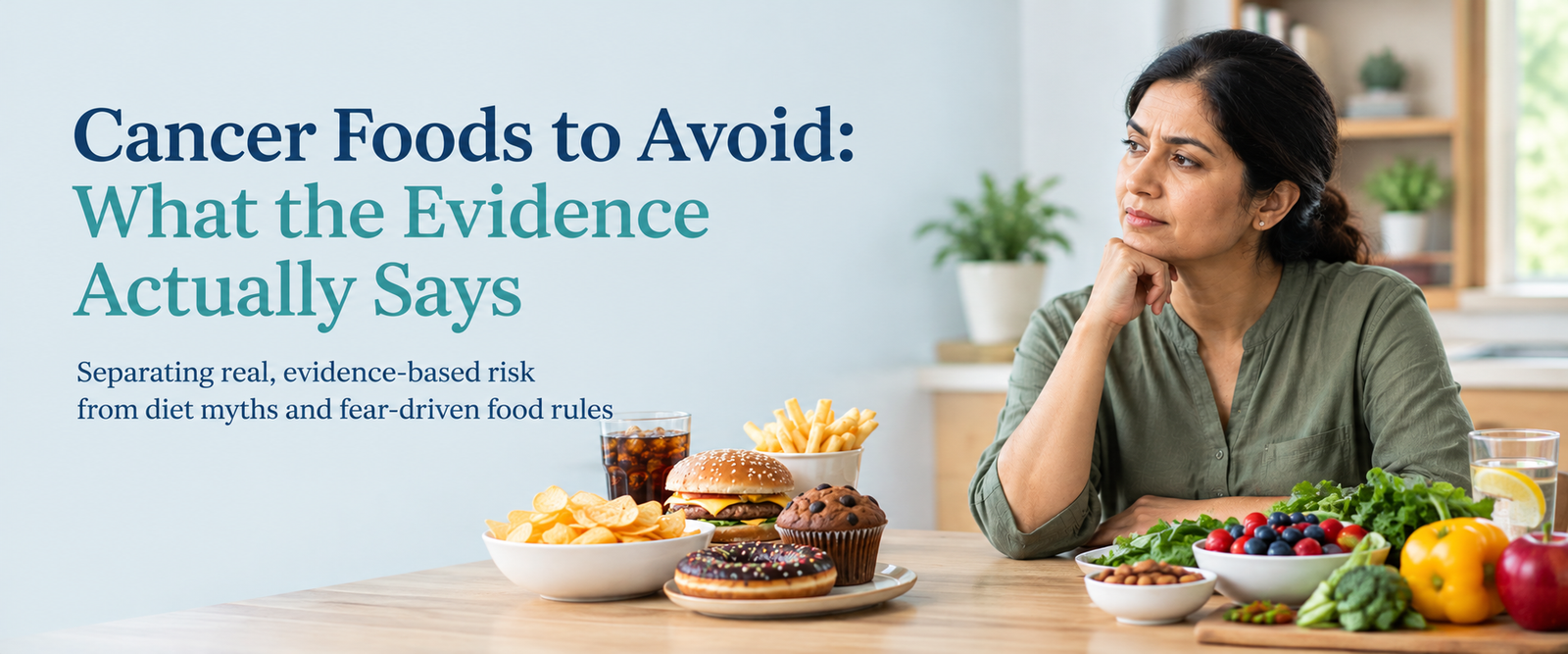
Cancer Foods to Avoid: What the Evidence Actually Says

Separating real, evidence-based risk from diet myths and fear-driven food rules

This page is for informational purposes only and does not replace medical advice. Please consult Dr Aditya Sarin or a qualified oncologist or dietitian for guidance specific to your health situation. As of 2026, this reflects current clinical guidance.

Diet and cancer is one of the most rumour-prone corners of health information. Some of the fear is grounded in real evidence, and some of it isn’t. Getting the two straight matters, because overcorrecting on food myths can mean cutting out things that are actually fine, while ignoring the real risks means missing changes that genuinely move the needle.

Foods actually linked to increased cancer risk

The clearest, most established dietary link is with processed meat. According to the World Health Organisation, the International Agency for Research on Cancer classifies processed meat, items like hot dogs, sausages, bacon, and cured or smoked meats, as a Group 1 carcinogen, meaning there is sufficient evidence it causes cancer in humans, specifically colorectal cancer. Every 50-gram portion of processed meat eaten daily is associated with about an 18 per cent increase in colorectal cancer risk.

Red meat, meaning unprocessed beef, pork, lamb, and similar meats, is classified separately as Group 2A, probably carcinogenic to humans, a category reflecting more limited evidence. It’s worth being precise about what these classifications actually mean, since they describe the strength of evidence, not the size of the risk. The WHO is clear that this does not mean processed meat is as dangerous as tobacco smoking, even though both fall into the same Group 1 category, since Group 1 groups substances by how confident the evidence is, not by how much cancer they cause. Charred or heavily browned meat, cooked at very high temperatures, also produces certain chemicals shown to cause cancer in animal studies, though according to the National Cancer Institute, it remains unclear whether this translates to increased cancer risk in humans at typical consumption levels.

Does sugar cause cancer?

This is one of the most persistent myths in oncology, and it’s worth addressing directly. According to the National Cancer Institute, although cancer cells do consume more glucose than normal cells, no studies have shown that eating sugar makes an existing cancer worse, or that cutting sugar out will shrink a tumor. Every cell in the body, healthy and cancerous alike, runs on glucose for energy, so diet alone can’t selectively starve it.

Where sugar does matter is indirectly. A high-sugar diet can contribute to weight gain, and obesity is a well-established risk factor for several cancers, including breast, colon, and endometrial cancer. So the concern with sugar is really a concern about excess calories and weight over time, not sugar acting as a direct fuel source for tumor growth.

Alcohol and cancer risk

Unlike sugar, alcohol’s link to cancer is well established and direct, not indirect. According to the National Cancer Institute, drinking alcohol increases the risk of cancer of the mouth, throat, oesophagus, larynx, liver, and breast, and risk rises with the amount consumed. The risk climbs further, and substantially, in people who drink alcohol and also use tobacco.

A common piece of folk wisdom holds that red wine, because of a compound called resveratrol, might protect against cancer. The NCI is direct on this too: there is no evidence that drinking red wine reduces cancer risk. There isn’t a “safe” type of alcoholic drink from a cancer-risk standpoint, only a lower or higher quantity consumed.

Is there really an anti-cancer diet

No single food, supplement, or diet plan has been shown to prevent or cure cancer, and it’s worth being skeptical of any claim that suggests otherwise. According to the National Cancer Institute’s review of dietary research, cruciferous vegetables like broccoli and cabbage contain compounds that show anticancer effects in laboratory and animal studies, but the evidence in actual human populations is less clear-cut. Antioxidant supplements specifically have not been shown to reduce cancer risk in human trials, and some studies have even found an increased risk of certain cancers associated with taking them, which runs directly counter to the popular assumption that more antioxidants is simply better.

What does have consistent support is a general pattern rather than any single ingredient: a diet built around vegetables, fruits, whole grains, and legumes, with limited processed and red meat and moderate or no alcohol, alongside maintaining a healthy weight. This is closer to a foundation for lowering risk than a guaranteed shield against it.

What actually matters more than any single food

It’s easy to fixate on individual ingredients, cutting out sugar entirely, avoiding red meat altogether, chasing the latest superfood, while missing the bigger picture. Weight management, physical activity, and avoiding tobacco and excess alcohol consistently show stronger, more direct links to cancer risk than any single food choice does. Diet is one meaningful lever among several, not a standalone solution, and it works best as part of an overall pattern rather than a list of foods to obsessively avoid or chase.

The takeaway

The real, evidence-backed dietary risks worth taking seriously are processed meat and alcohol, both with genuine, quantified links to specific cancers. Sugar itself is not a direct cancer risk in the way it’s often portrayed, and no single food or supplement can prevent or cure cancer on its own. A consistent, reasonable dietary pattern matters more than any individual rule.

If you have questions about diet and cancer risk or recurrence specific to your situation, book a consultation with Dr Aditya Sarin at Sir Ganga Ram Hospital, New Delhi.

References

  1. World Health Organization: Cancer: Carcinogenicity of the Consumption of Red Meat and Processed Meat.
  2. National Cancer Institute: Common Cancer Myths and Misconceptions.
  3. National Cancer Institute: Risk Factors: Alcohol.
  4. National Cancer Institute: Risk Factors: Diet.

Frequently Asked Questions

Should cancer patients cut out sugar completely?

There’s no evidence this helps, and doing so can make it harder to get adequate nutrition during treatment, when maintaining calorie intake and muscle mass often matters more. Discuss this with your oncologist or a dietitian rather than deciding on your own.

Is any amount of alcohol safe when it comes to cancer risk?

Risk increases with the amount consumed, and there’s no threshold below which alcohol has been shown to have zero cancer risk. Moderation, or avoiding it altogether, particularly for people with other risk factors, is the more cautious approach.

Can eating more antioxidants lower my cancer risk?

Human studies haven’t consistently shown that antioxidant supplements reduce cancer risk, and some studies have found the opposite in certain populations. Getting antioxidants through whole foods rather than supplements is generally the better-supported approach.

Is red meat as dangerous as processed meat for cancer risk?

No, the evidence is weaker and different. Processed meat is classified as a definite carcinogen based on sufficient evidence, while red meat is classified in a lower-certainty category, probably carcinogenic, based on more limited evidence.

Dr. Aditya Sarin — Medical Oncologist, Sir Ganga Ram Hospital, Delhi
Medically reviewed & written by

Dr. Aditya Sarin

Consultant, Medical Oncology · Sir Ganga Ram Hospital, New Delhi

MD (General Medicine) · DrNB (Medical Oncology) · ESMO (European) Board Certified

Dr. Aditya Sarin is a medical oncologist who combines precision molecular profiling with evidence-based, compassionate cancer care. Named Young Medical Oncologist of the Year, he treats the full spectrum of solid and blood cancers through a multidisciplinary tumor-board approach at Sir Ganga Ram Hospital.

Breast Cancer Lung Cancer GI Cancers Head & Neck Gynecologic Cancers Immunotherapy Targeted Therapy Precision / Molecular Oncology Leukemia · Lymphoma · Myeloma