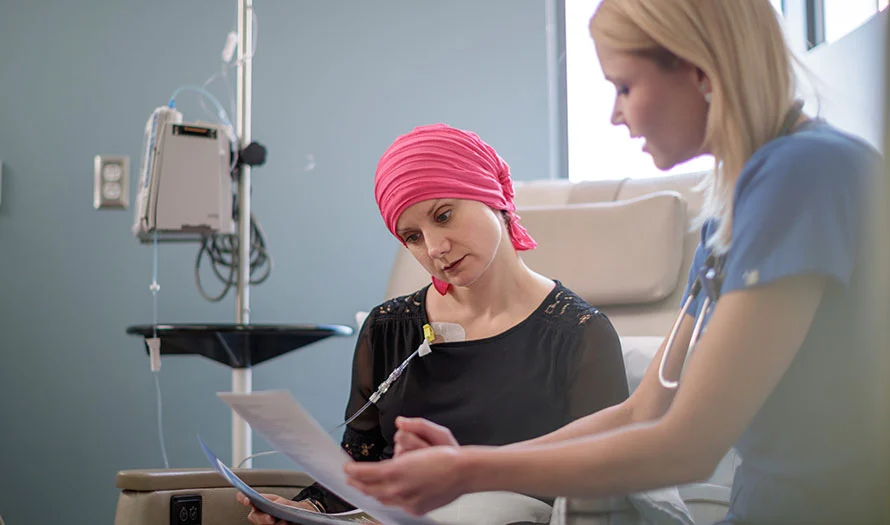
Why asking questions matter?
Your oncologist has the medical expertise. You have knowledge of your own body, life, values, and priorities. Good cancer care happens when both come together.
Asking questions helps you fully understand your diagnosis, make informed treatment decisions, manage side effects more effectively, and build a stronger relationship with your care team.
A good oncologist will never make you feel like your questions are a burden. If they do, that itself is useful information.
Questions to ask about your diagnosis
These are your foundation questions. Ask these first, before discussing any treatment.
About the cancer itself
- What type of cancer do I have, exactly?
- What stage is it, and what does that stage mean for me?
- Has it spread to any other parts of my body?
- How certain are you of this diagnosis?
- Do I need any additional tests to confirm or complete the picture?
About your pathology report
- Can you walk me through my pathology report in simple language?
- What do the receptor status or biomarker results mean?
- Has my tumor been tested for genetic mutations?
- Are there specific markers that will affect which treatments work best for me?
Our cancer diagnostics guide covers what these tests involve in more detail.
About prognosis
- What is the likely progression of this cancer if untreated?
- What are the realistic outcomes with treatment?
- Are there factors in my case that make it more or less serious?
Questions to ask about treatment options
Never assume there is only one path. Good oncologists present options, and your job is to understand each one.
Understanding the plan
- What treatment do you recommend, and why specifically for my case?
- What treatment options are available to me?
- What is the goal of treatment: cure, long-term control, or symptom management?
- What happens if I choose not to treat, or delay treatment?
Comparing options
- How does chemotherapy compare to targeted therapy or immunotherapy for my cancer?
- Is surgery part of my treatment plan, and is it necessary or optional?
- Should radiation therapy be part of my plan?
- Is a combination of treatments recommended?
Our pages on chemotherapy, targeted therapy, and immunotherapy explain how each approach works and when it is typically used.
About precision oncology
- Has my tumor been tested for molecular or genetic markers?
- Am I a candidate for targeted therapy based on my tumor profile?
- Is immunotherapy an option for my cancer type?
- What role does precision medicine play in my treatment plan?
Oncologists such as Dr Aditya Sarin use genetic and molecular profiling to personalize treatment plans. It is worth asking your own oncologist whether this approach applies to your case.
Questions to ask about side effects
Side effects are real, manageable, and worth discussing in detail before treatment begins, not after.
- What are the most common side effects of my recommended treatment?
- Which side effects are serious and need immediate attention?
- Which side effects should I expect, and which ones are rare?
- How will side effects impact my daily life, energy levels, and ability to work?
- What can be done to prevent or reduce side effects?
- How will nausea, fatigue, hair loss, or pain be managed?
- Will treatment affect my fertility, and should I consider fertility preservation before starting?
- Are there long-term or permanent side effects I should know about?
Questions to ask about treatment logistics
Practical questions matter. Treatment affects your entire life, not just your body.
Timeline and schedule
- How long will my treatment last in total?
- How often will I come in for treatment sessions?
- How long does each session take?
- Will I need to be hospitalized, or is this outpatient?
- When will we know if treatment is working?
During treatment
- Can I continue working during treatment?
- Are there dietary restrictions or foods I should avoid?
- Can I exercise, and what level of activity is safe?
- Are there activities or medications I must avoid?
- Can I travel during treatment?
Monitoring progress
- What tests will be done to track whether treatment is working?
- How soon will we see results?
- What happens if the first treatment does not work, and is there a plan B?
Questions to ask about your healthcare team
You are not just choosing an oncologist. You are choosing a team.
- Who else will be involved in my care, such as a surgeon, radiation oncologist, nurse, or nutritionist?
- Does your hospital have a multidisciplinary tumor board that will review my case?
- Who is my primary point of contact for day-to-day questions?
- Who do I call after hours if I have an urgent concern?
- Will I always see you, or will I sometimes see another doctor?
- Is there a nurse navigator or patient coordinator assigned to my case?
If you are still deciding on a specialist, our guide on choosing the right cancer specialist in Delhi walks through what to look for in a doctor and a hospital.
Questions to ask about clinical trials
Clinical trials give access to treatments not yet widely available, and they are always worth asking about.
- Am I eligible for any clinical trials?
- What are the potential benefits and risks of participating in a trial?
- How does a trial treatment compare to the standard treatment?
- Will participating in a trial cost me more?
- Where can I find information on trials relevant to my cancer?
The National Cancer Institute’s clinical trials network is a useful reference for understanding how international cancer clinical trials are structured.
Questions to ask about cost and support
Financial stress from cancer treatment costs is real. Ask openly, without hesitation.
- What is the estimated total cost of my treatment?
- Does your hospital accept my insurance, and what will be covered?
- Are there generic alternatives to expensive medications?
- Are financial assistance programs or NGO support available?
- Is online or teleconsultation available for follow-up visits?
- What support services does the hospital offer, such as counseling, nutrition, or pain management?
- Are there patient support groups I can join?
Questions to ask about second opinions
Every patient has the right to a second opinion, and a confident oncologist will support this.
- Do you support me getting a second opinion?
- Can you share my reports and biopsy slides with another specialist?
- Is there another oncologist within your hospital I could consult?
- Would a second opinion delay my treatment in any harmful way?
You can read more about how this process works on our second opinion page.
Questions for follow-up appointments
Once treatment begins, keep asking. Your questions will evolve.
- Is my treatment working as expected?
- Have there been any changes to my diagnosis or staging?
- Do my recent test results change the treatment plan?
- What signs of recurrence should I watch for?
- How often will I need check-ups after treatment ends?
- What does life look like after treatment, and what is my follow-up schedule?
Tips for getting the most from your appointment
Before you go
- Write down your questions in order of priority, most important first.
- Bring a family member or trusted friend to listen and take notes.
- Carry all previous reports, scans, biopsy results, and prescription records.
- Note all current medications and supplements you take.
During the appointment
- Do not apologize for asking questions.
- Ask the doctor to slow down or repeat if something is unclear.
- Request written summaries of key information where possible.
- Ask if there is anything else you should be asking that you have not.
After the appointment
- Review your notes while memory is fresh.
- Write down new questions that came up.
- Do not hesitate to call the clinic if something is unclear.
The one question that changes everything
If you remember nothing else from this guide, remember this one question to ask your oncologist.
“What would you recommend if this were your family member?”
It cuts through clinical language and gets to the heart of what your doctor truly believes is best. Most oncologists answer this one with particular honesty and care.
The takeaway
Walking into an oncology appointment with the right questions transforms you from a passive patient into an active participant in your own care. You deserve to understand every aspect of your diagnosis, your treatment, and your options.
Dr Aditya Sarin, DrNB Medical Oncology, MD (General Medicine), ESMO Board Certified, is a Consultant Medical Oncologist at Sir Gangaram Hospital, New Delhi. His approach centers on explaining complex medical information clearly, welcoming questions at every stage, and building treatment plans around each patient’s genetic profile and personal circumstances.
You do not need to have all the answers. You just need to start asking the right questions. You can book a consultation with Dr Aditya Sarin to begin that conversation.